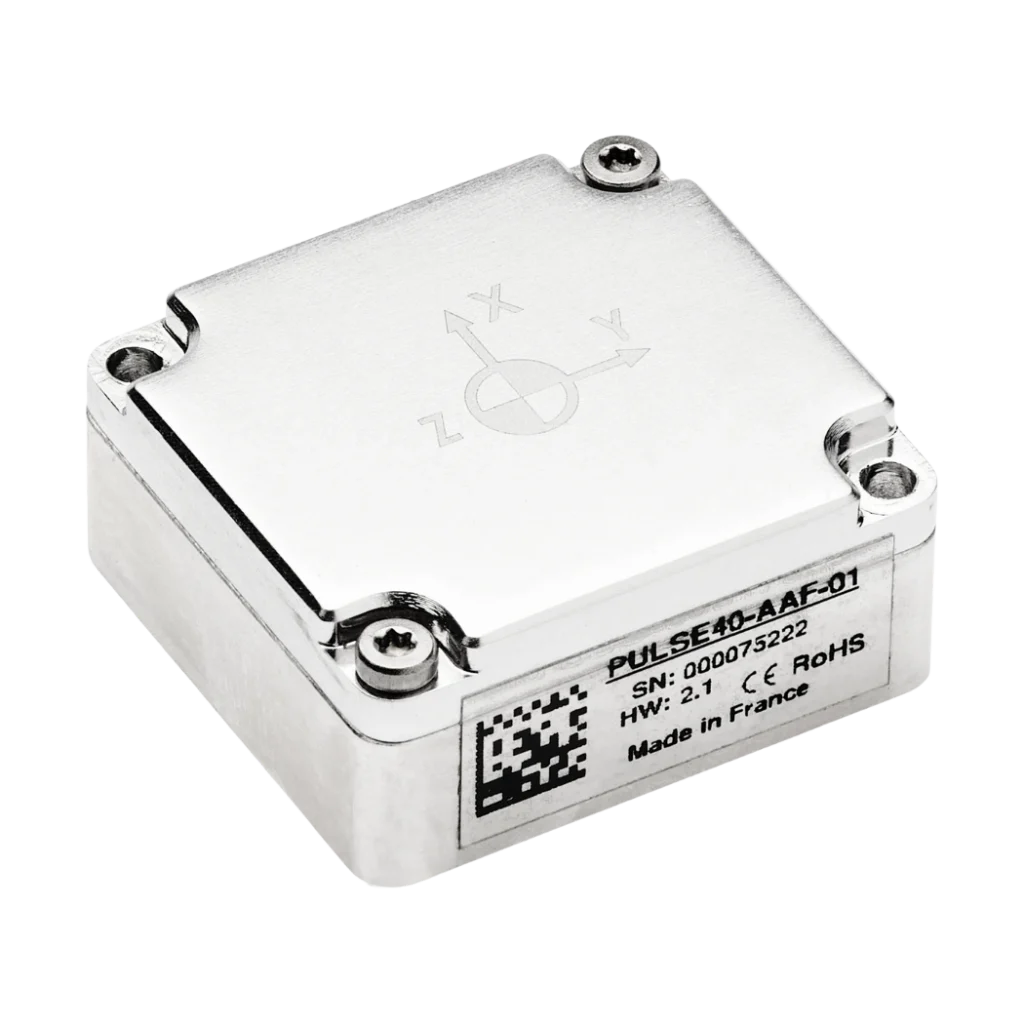
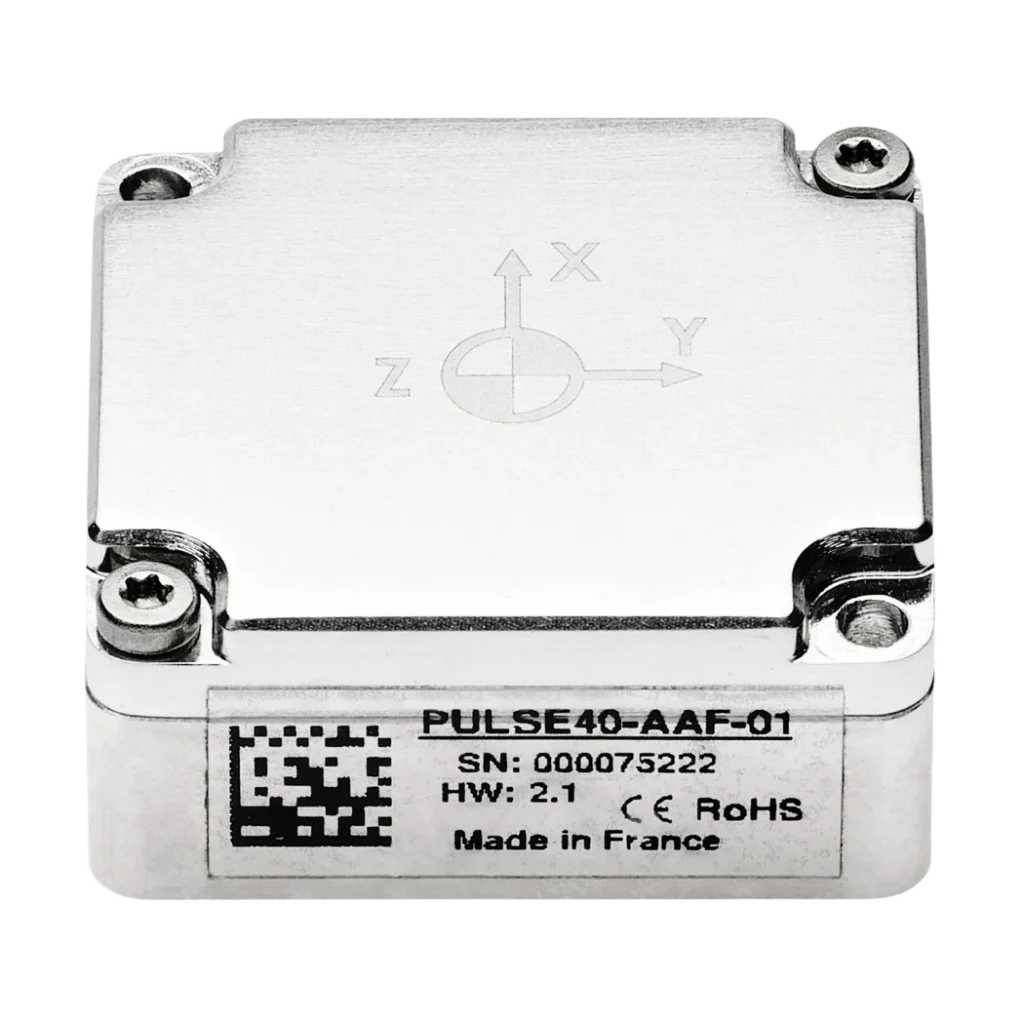
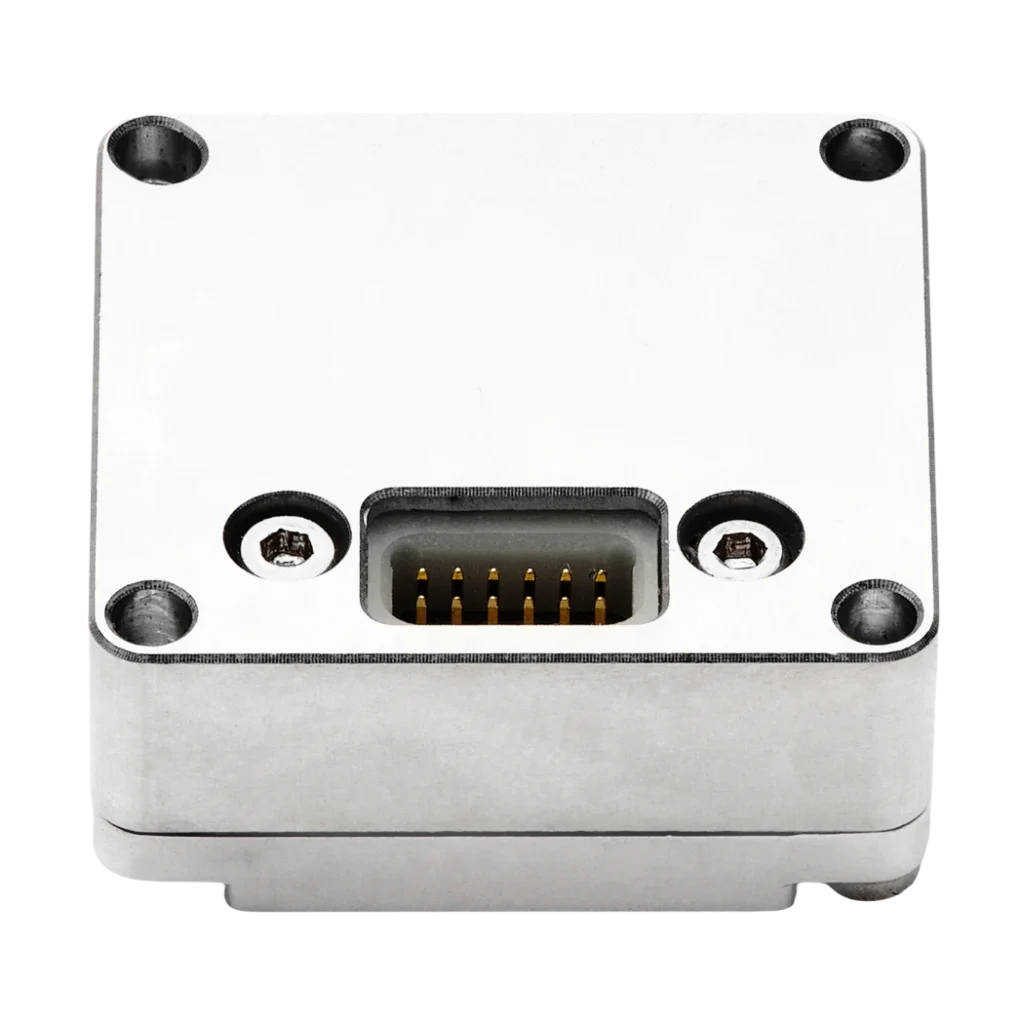
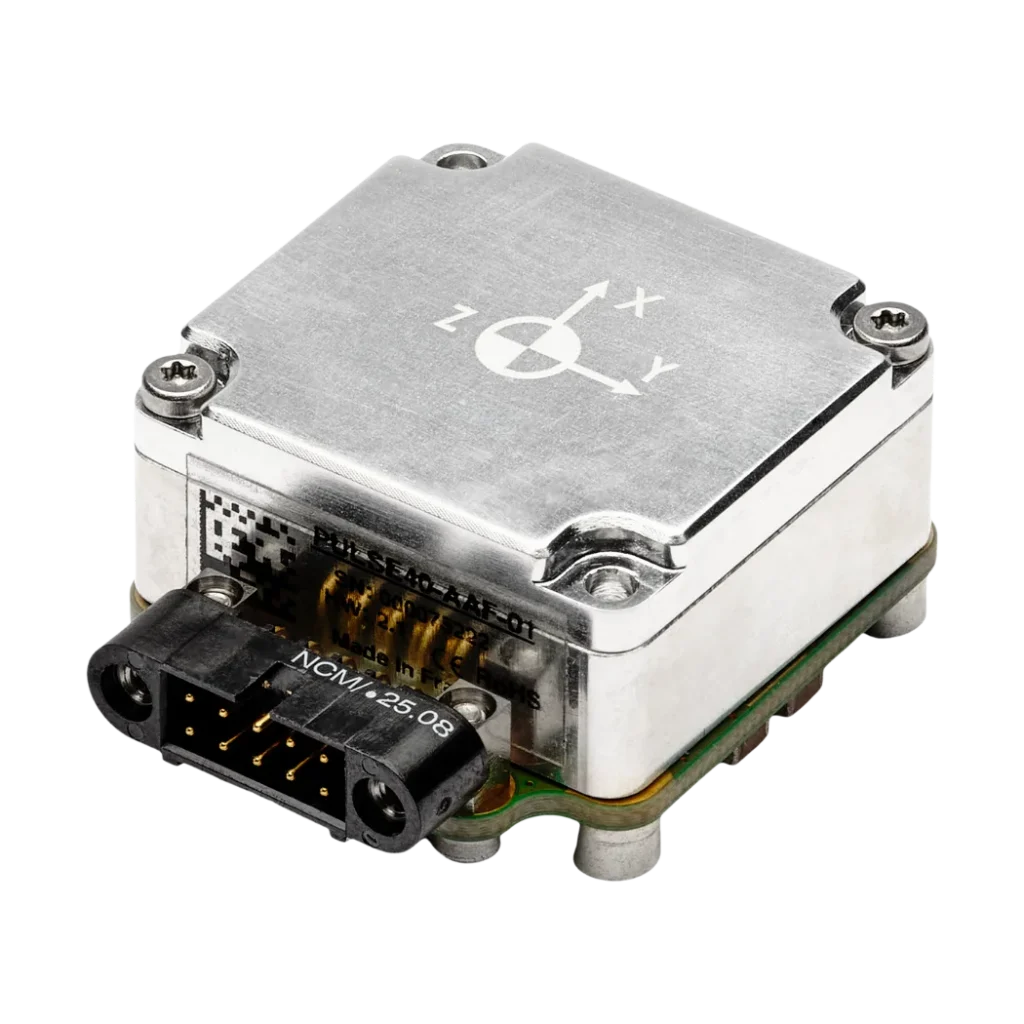
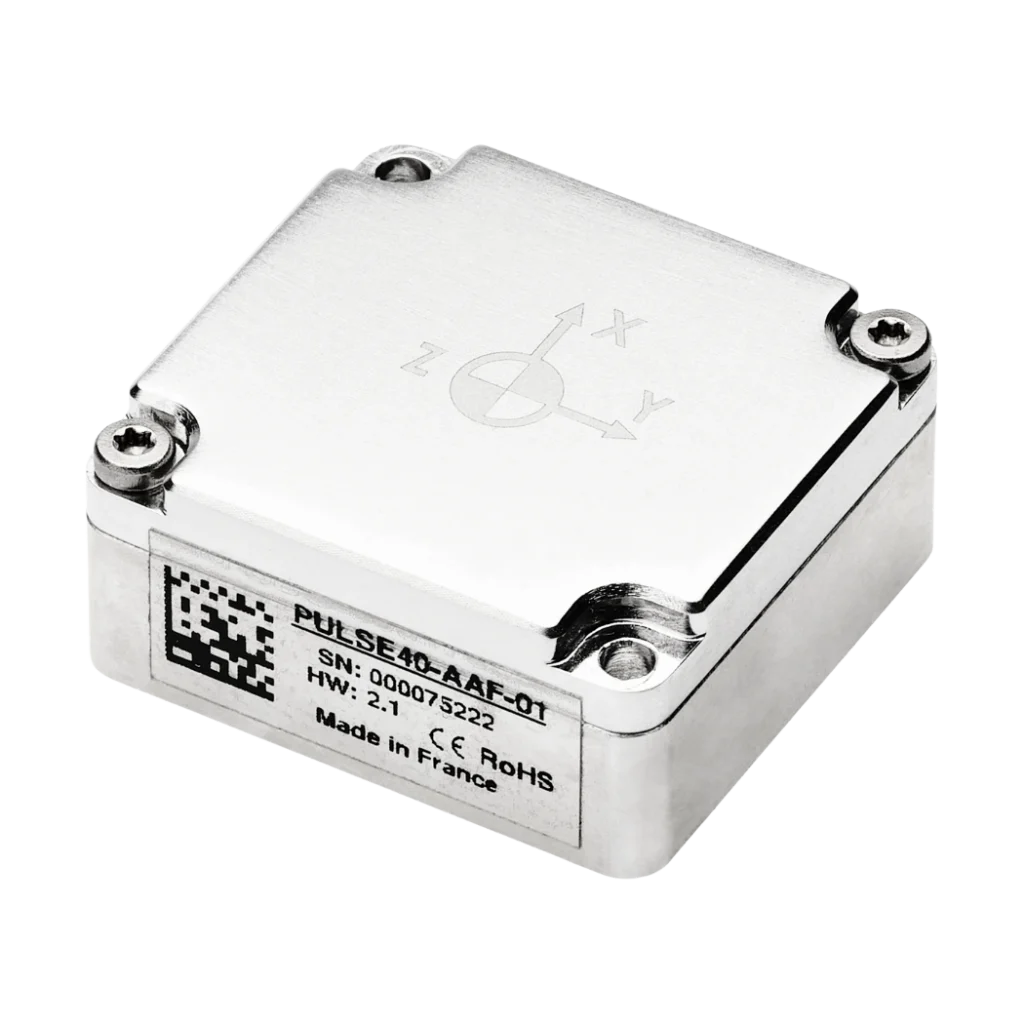
Pulse-40 OEM Miniature 9DoF tactical-grade IMU for mission-critical embedded systems
Pulse‑40 OEM combines tactical-grade inertial performance, exceptional environmental resilience and integrated vibration intelligence in an ultra-compact OEM package designed for the most demanding applications.
The Pulse-40 OEM is ITAR FREE and not restricted for export.
Features
The Pulse-40 OEM integrates high-performance inertial sensing with advanced diagnostic layers to ensure data integrity. Designed for mission-critical reliability, the system balances raw sensor precision with robust environmental mitigation and real-time fault detection.
Every unit undergoes individual multi-axis thermal calibration to ensure stability across its entire operating range.


Pulse-40 OEM at a glance
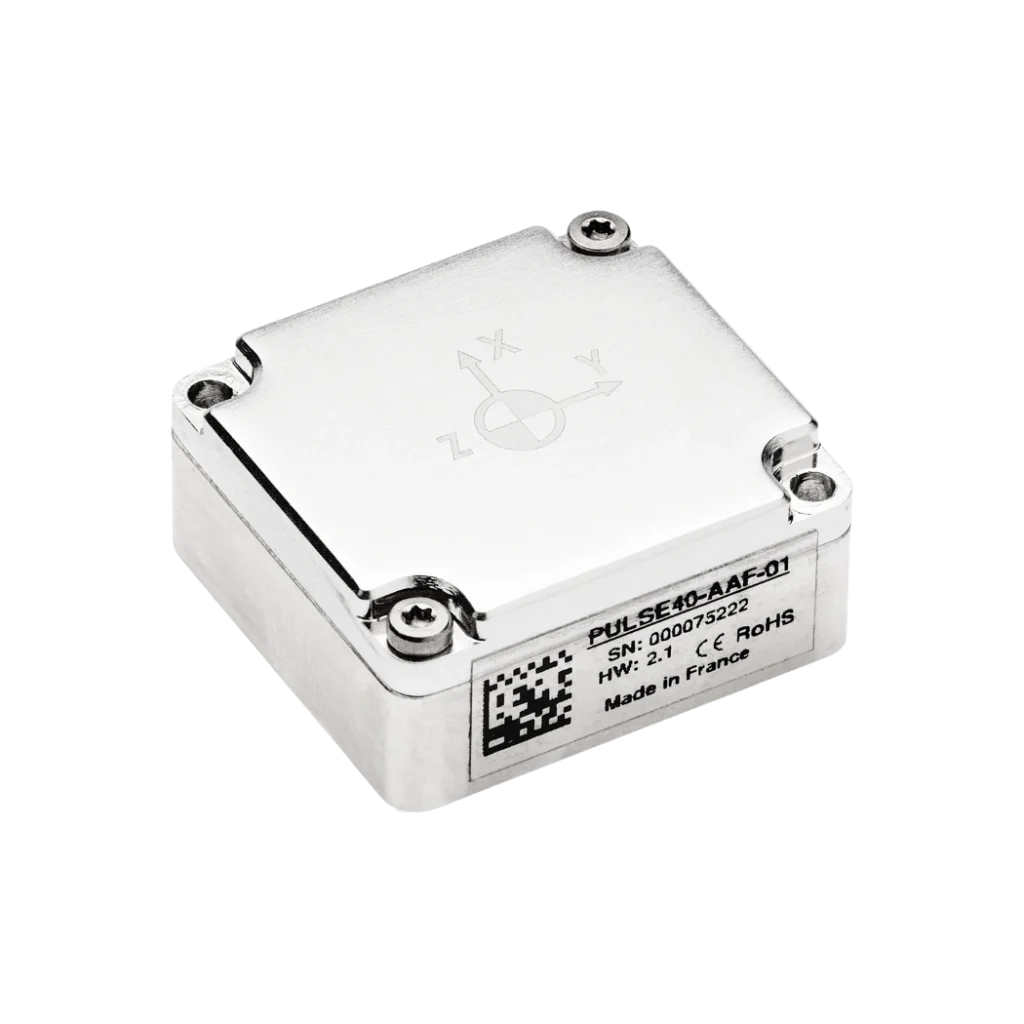
The Pulse‑40 OEM is a compact OEM IMU engineered for tactical‑grade performance.
Discover below the technologies and features behind its exceptional reliability and ease of integration.
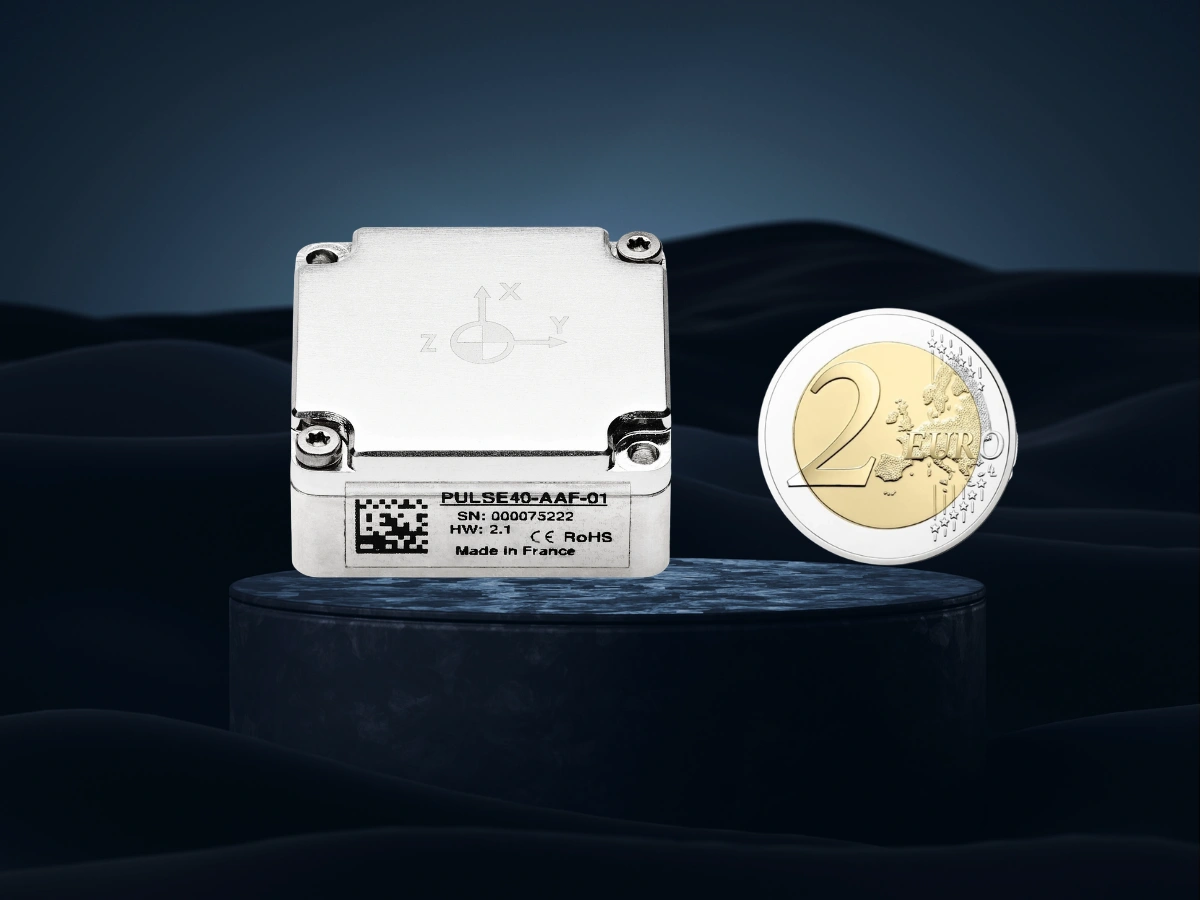
Optimized SWAP-C
The Pulse‑40 OEM combines a compact 30 mm (L) × 28 mm (W)× 13.3 mm (H) footprint, just 19 g of weight and 0.3 W power consumption, enabling tactical-grade performance in the most constrained embedded systems.
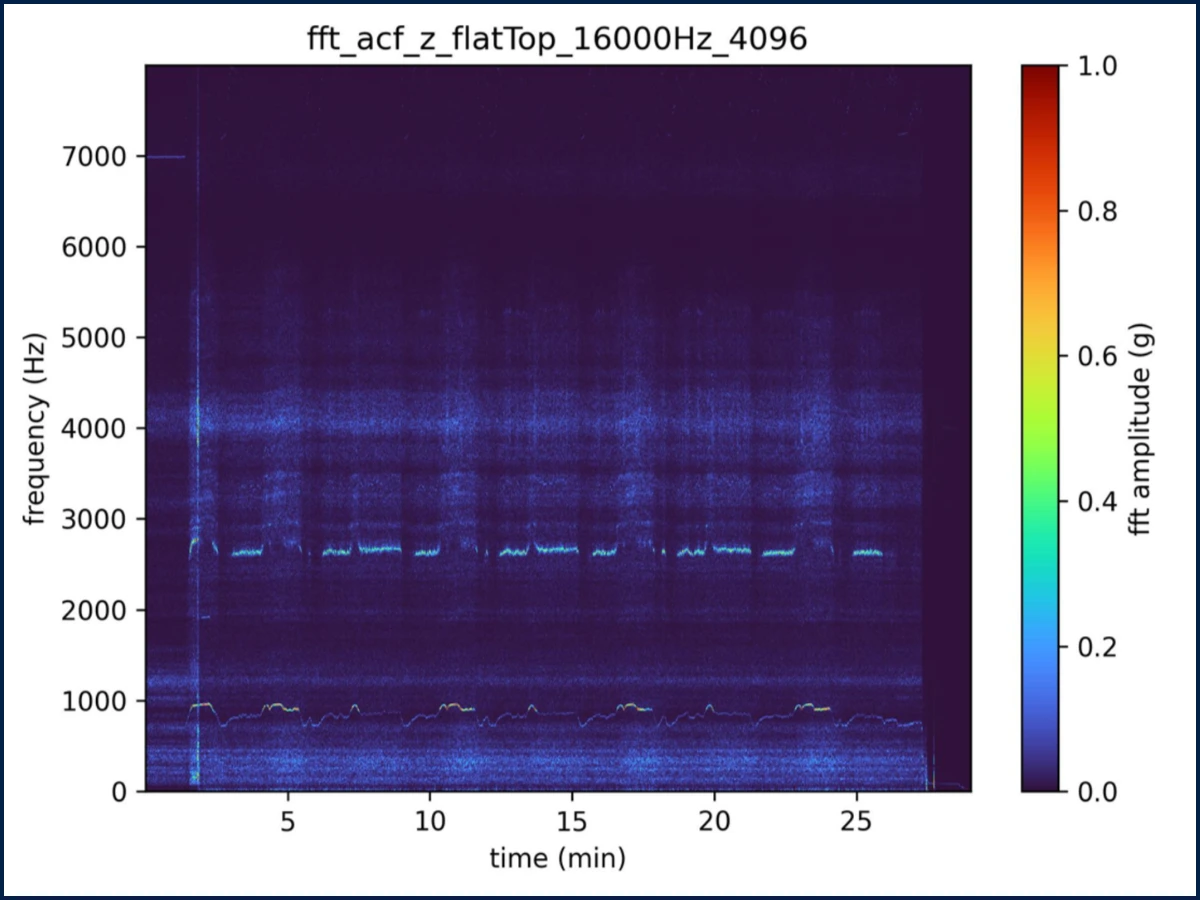
Built-in vibration monitoring tool
The Pulse-40 embeds a dedicated vibration monitoring solution providing the full vibration spectrum (FFT) up to 8kHz and high-level warnings.
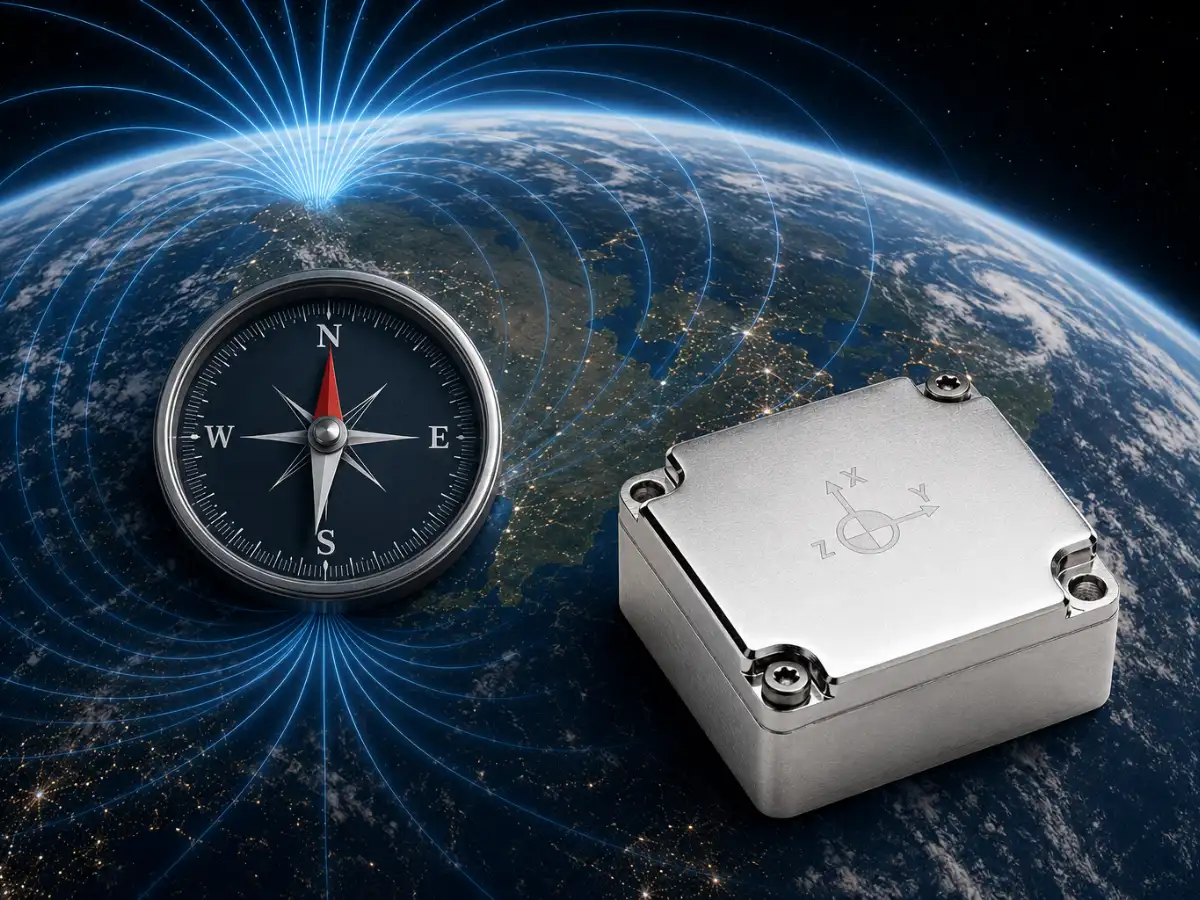
Built-in magnetometer
The Pulse‑40 OEM features integrated three-axis magnetometers, enabling a complete 9‑DoF sensing solution within the same compact footprint.
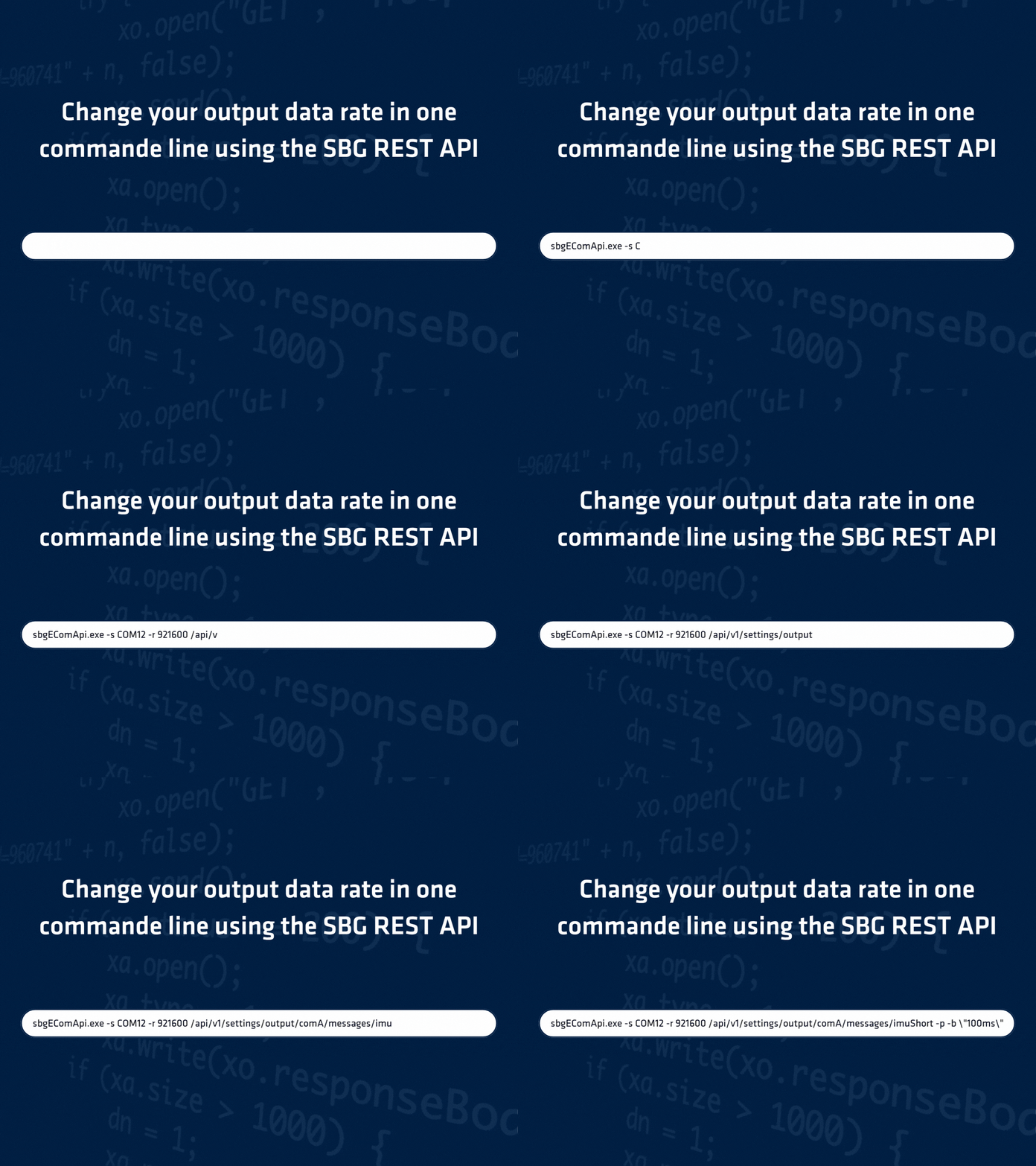
High level easy to use API
Built on SBG Systems’ standard communication framework, the Pulse‑40 OEM offers a consistent integration experience across all products.
The sbgECom protocol delivers high-bandwidth, low-latency data streams, while the RESTful sbgINSrestApi enables complete software-based configuration and control.
Product specifications
Accelerometer performance
±40 g Long term bias repeatability
1250 µg Bias in-run instability
6 μg Scale factor
500 ppm Velocity Random Walk
0.02 m/s/√h Vibration Rectification Error
0.03 mg/g² Bandwidth
250 Hz
Gyroscope performance
± 4000 °/s Long term bias repeatability
150 °/h Bias in-run instability
0.5 °/h Scale factor
500 ppm Angular Random Walk
0.18 °/√h Vibration Rectification Error
0.2 °/h/g² Bandwidth
250 Hz
Interfaces
Binary sbgECom Output rate
Up to 2 kHz Inputs / Outputs
1x UART (LvTTL) – up to 4 Mbps Sync IN/OUT
1x Sync out / Clock in Clock Modes
Internal or external (direct at 2kHz or scaled) IMU configuration
sbgINSRestAPI (clock mode, ODR, sync in/out, events)
Mechanical & electrical specifications
3.3 VDC Power consumption
0.30 W EMC
EN 55032:2015, EN 61000-4-3, EN 61000-6-1, EN 55024 Weight (g)
19 g Dimensions (LxWxH)
30 mm x 28 mm x 13.3 mm
Environmental specifications & operating range
IP-50 Operating Temperature
-40 °C to 85 °C Vibrations
10 g RMS – 20 to 2 kHz & 6 g RMS 20Hz to 4.5kHz Shocks
2000 g for 0.3 ms MTBF (computed)
4 000 000 hours Compliant with
MIL-STD-810
Engineered for mission critical applications
Versatile and field-proven, Pulse‑40 OEM delivers the performance, robustness and SWaP efficiency required by mission-critical applications ranging from precision-guided munitions and seeker stabilization to navigation systems, optronics and autonomous platforms.
Navigation Systems
Pulse‑40 OEM delivers reliable orientation and motion data for navigation systems operating in GNSS-challenged environments, enabling accurate attitude estimation and dead reckoning across land, air and sea platforms.
Key benefits
- Tactical-grade inertial performance
- Advanced clock synchronization features with internal clock and external clocks support
- Excellent bias stability and repeatability
- Very low noise for improved navigation accuracy
- Proven resilience to vibration, EMC disturbances and harsh environments
- Integrated magnetometers for enhanced heading observability
Autonomous Systems
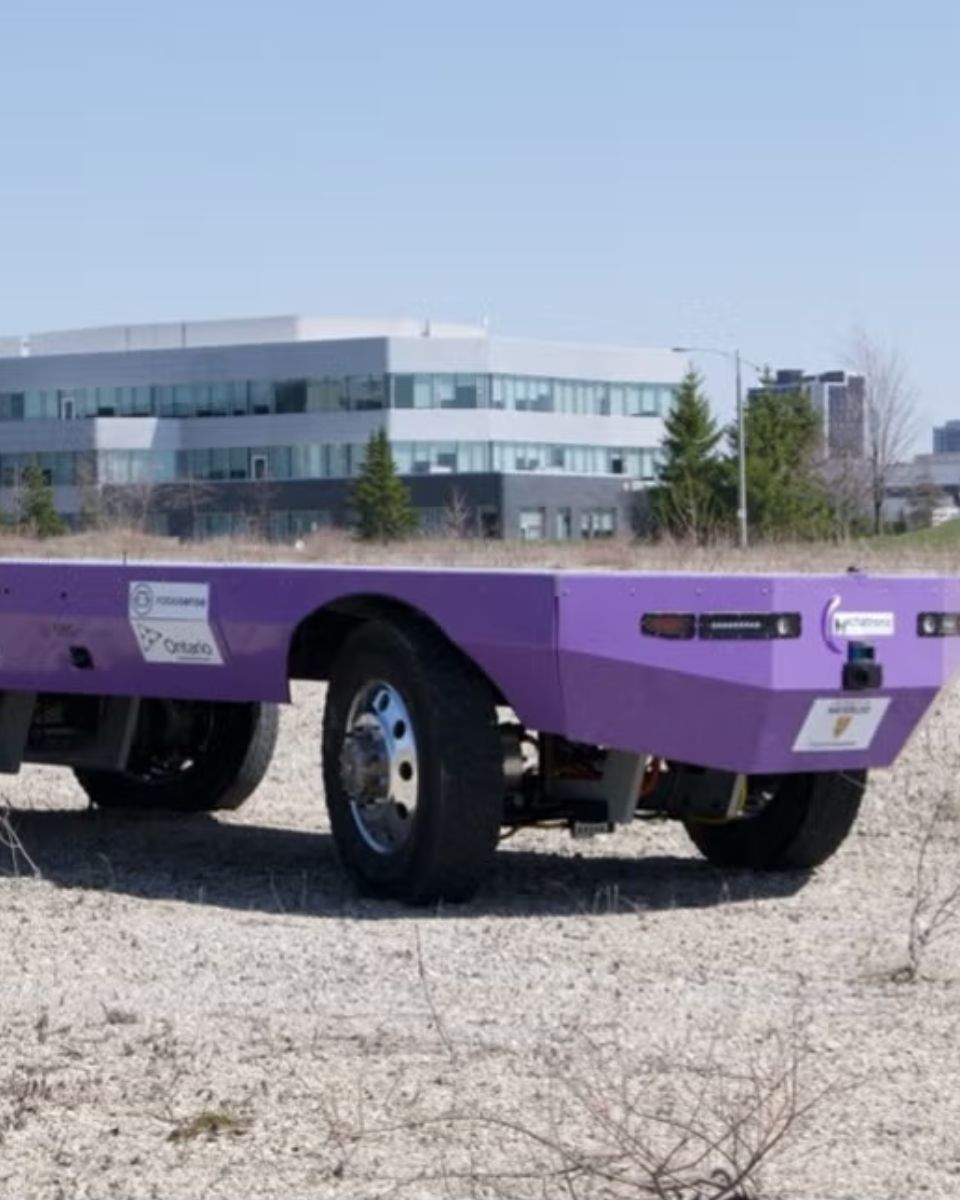
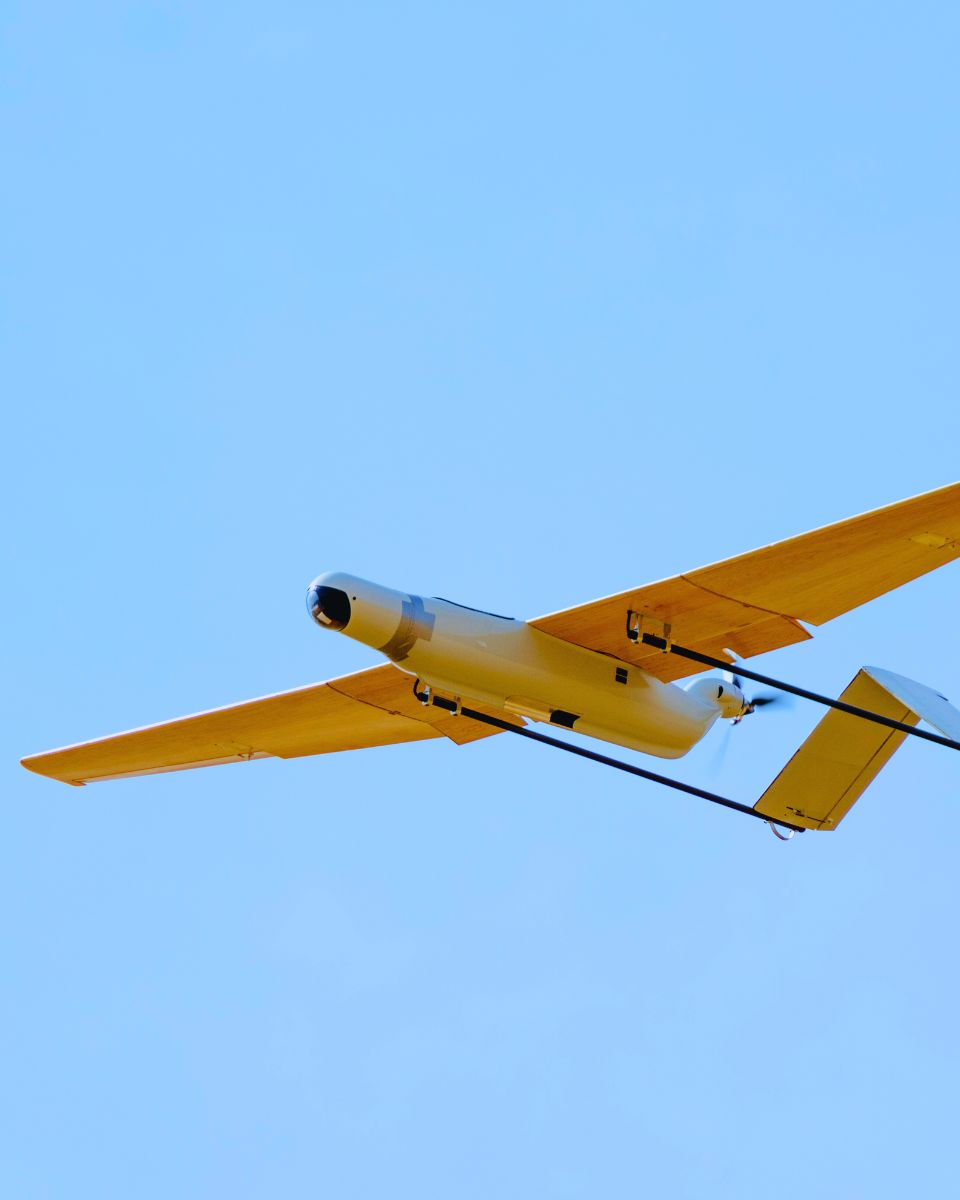
Pulse‑40 OEM provides reliable motion sensing and orientation data for autonomous platforms, supporting localization, navigation and control in challenging operational environments.
Key benefits
- Tactical grade performance for accurate attitude and motion sensing
- Advanced clock synchronization features with internal clock and external clocks support
- Compact SWaP-optimized design
- Continuous built-in monitoring
- Enhanced robustness to vibration and EMC disturbances
- Simplified OEM integration
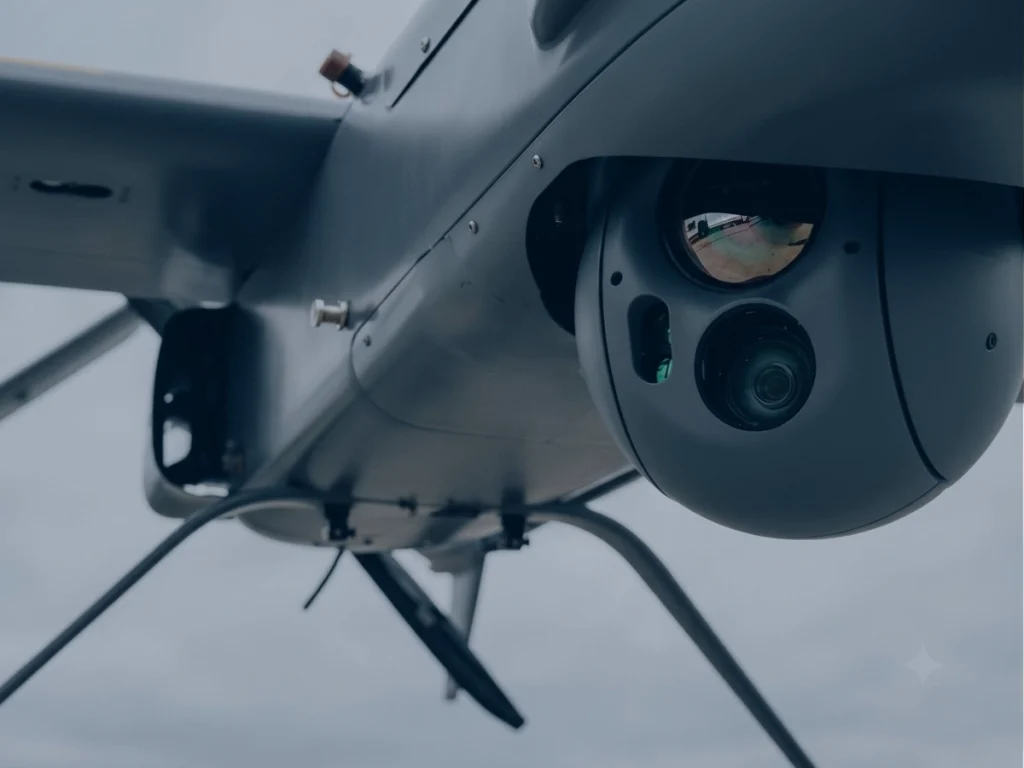
EO/IR Stabilization
Pulse‑40 OEM enables smooth stabilization and accurate payload pointing for optronic systems operating on moving platforms offering excellent tracking performance under demanding conditions.
Key benefits
- Very low noise for superior stabilization accuracy (ARW 0.08 °/√h)
- Low latency (1.5ms motion to output)
- High-bandwidth measurements for responsive stabilization loops
- Compact and lightweight integration
- Stable performance in vibrating environments
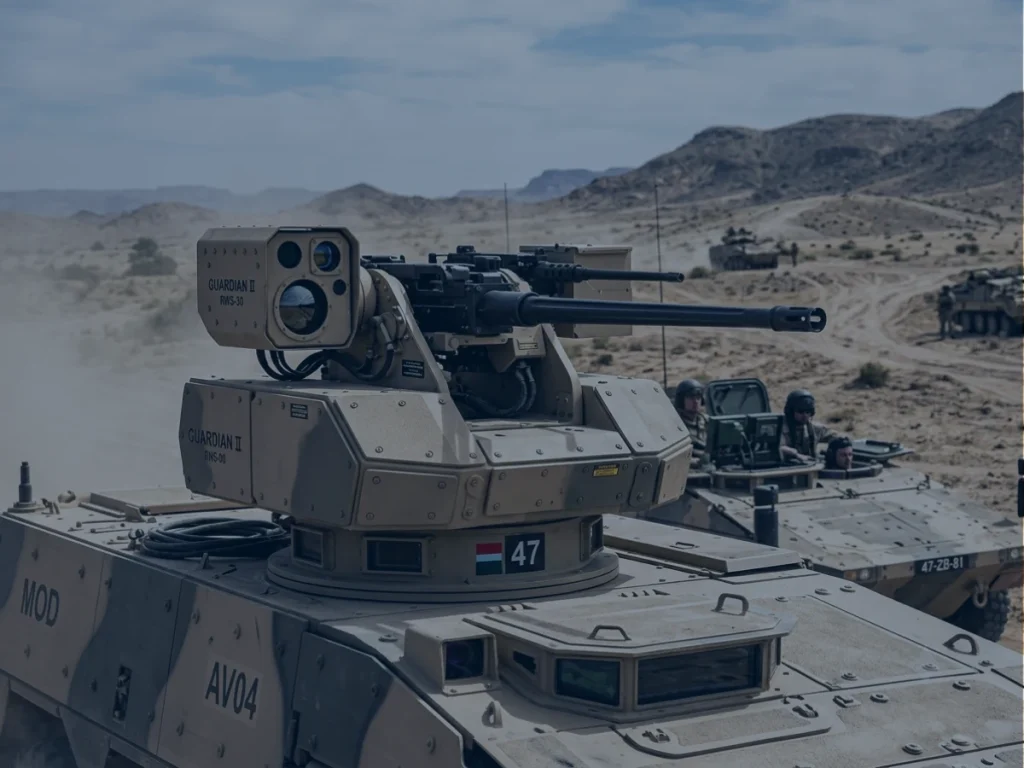
Remote Weapon Stations & Turrets
Pulse‑40 OEM enables precise weapon stabilization, tracking and pointing on mobile platforms, maintaining accuracy despite vehicle motion, vibration and shocks.
Key benefits
- Excellent angular stability during platform motion
- High vibration resilience with Low VRE (0.02 °/h/g²)
- Low latency for responsive stabilization loops
- Compact yet rugged OEM design
- Consistent performance across harsh operating conditions
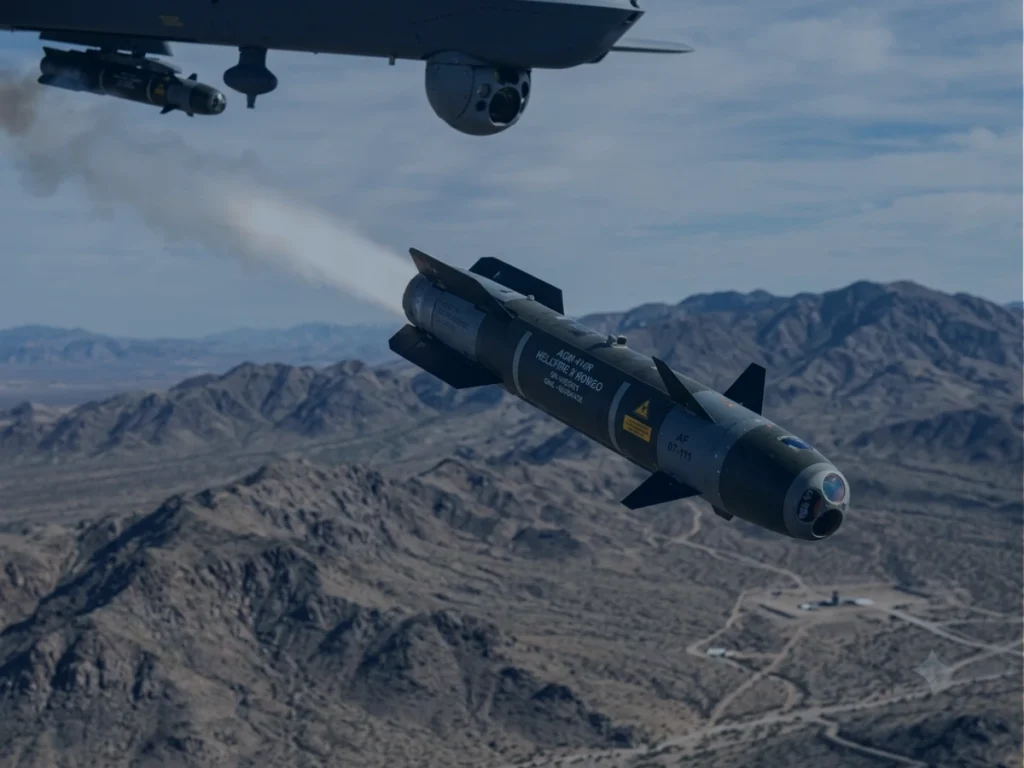
Precision-Guided Munitions (GNC)
Pulse‑40 OEM delivers accurate motion sensing for guidance, navigation and control systems in missiles, guided rockets and glide bombs, combining tactical-grade performance with the compact size, low weight and environmental resilience required by modern precision strike platforms.
Key benefits
- Complete supply chain control for Guided Munitions and Sovereign defense programs
- ±4000°/s gyroscope and 40g accelerometer range for high-dynamic maneuvers
- High environmental survivability with extensive qualification beyond MIL-STD-810
- Tactical-grade bias stability for navigation and guidance
- Compact 30 × 28 × 13.3 mm form factor and low weight (19g)
- Low power consumption (0.3W) for SWaP-constrained designs
Seeker Stabilization & Control
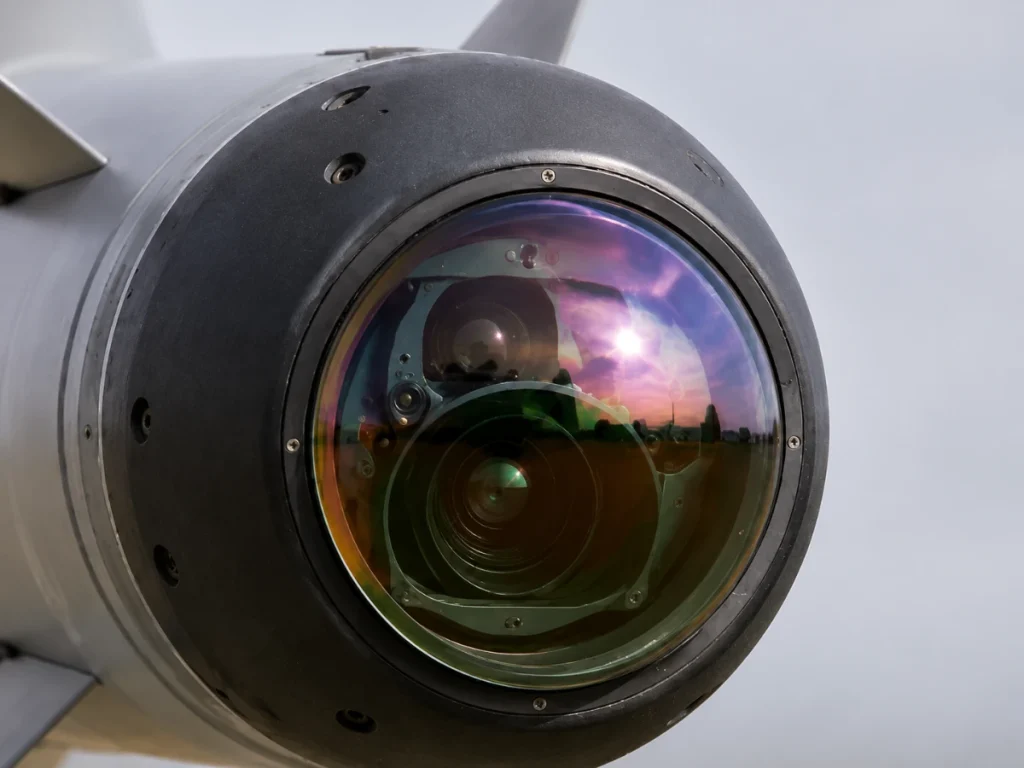
Pulse‑40 OEM provides low-latency attitude measurements for EO/IR seekers, enabling precise line-of-sight stabilization, target tracking and terminal guidance control in highly dynamic environments.
Key benefits
- Controlled and traceable supply chain for sovereign seeker development programs
- Low noise, High-bandwidth measurements and only 1.5 ms latency
- ±4000°/s gyroscope and 40g accelerometer range for high-dynamic maneuvers
- Maintains pointing accuracy during aggressive maneuvers
- High update rates (2kHz) for responsive control loops


Pulse-40 datasheet
Get all the sensor features and specifications delivered straight to your inbox!
Compare Pulse-40 with other products
Explore how Pulse-40 stacks up against other products with our comprehensive comparison table.
Discover the unique advantages it offers in performance, precision, and compact design, making it a standout choice for your orientation and navigation needs.
-
Pulse-40 OEM
- Accelerometer Range
- ±40 g
- Gyroscope Range
- ± 4000 °/s
- Accelerometer Bias in-run instability
- 6 μg
- Gyroscope Bias in-run instability
- 0.5 °/h
- Velocity Random Walk
- 0.02 m/s/√h
- Angular Random Walk
- 0.18 °/√h
- Accelerometer Bandwidth
- 250 Hz
- Gyroscope Bandwidth
- 250 Hz
- Output rate
- Up to 2kHz
- Operating voltage
- 3.3 to 5.5 VDC
- Power consumption
- 0.30 W
- Weight (g)
- 19 g
- Dimensions (LxWxH)
- 30 x 28 x 13.3 mm
-
- Accelerometer Range
- ± 40 g
- Gyroscope Range
- ± 1000 °/s
- Accelerometer Bias in-run instability
- 14µg
- Gyroscope Bias in-run instability
- 7 °/h
- Velocity Random Walk
- 0.03 m/s/√h
- Angular Random Walk
- 0.08 °/√h
- Accelerometer Bandwidth
- 203 Hz
- Gyroscope Bandwidth
- 125 Hz
- Output rate
- Up to 2kHz
- Operating voltage
- 4 to 15 VDC
- Power consumption
- 400 mW
- Weight (g)
- 10 g
- Dimensions (LxWxH)
- 26.8 x 18.8 x 9.5 mm
-
- Accelerometer Range
- ± 40 g
- Gyroscope Range
- ± 400 °/s
- Accelerometer Bias in-run instability
- 6 μg
- Gyroscope Bias in-run instability
- 0.05 °/h
- Velocity Random Walk
- 0.02 m/s/√h
- Angular Random Walk
- 0.012 °/√h
- Accelerometer Bandwidth
- 450 Hz
- Gyroscope Bandwidth
- 100 Hz
- Output rate
- Up to 2 kHz
- Operating voltage
- 5 to 36 VDC
- Power consumption
- 2 W
- Weight (g)
- 250 g
- Dimensions (LxWxH)
- 56 x 56 x 48 mm


Product compatibility



Documentation & resources
Pulse-40 comes with comprehensive documentation, designed to support users at every step.
From installation guides to advanced configuration and troubleshooting, our clear and detailed manuals ensure smooth integration and operation.
Case studies
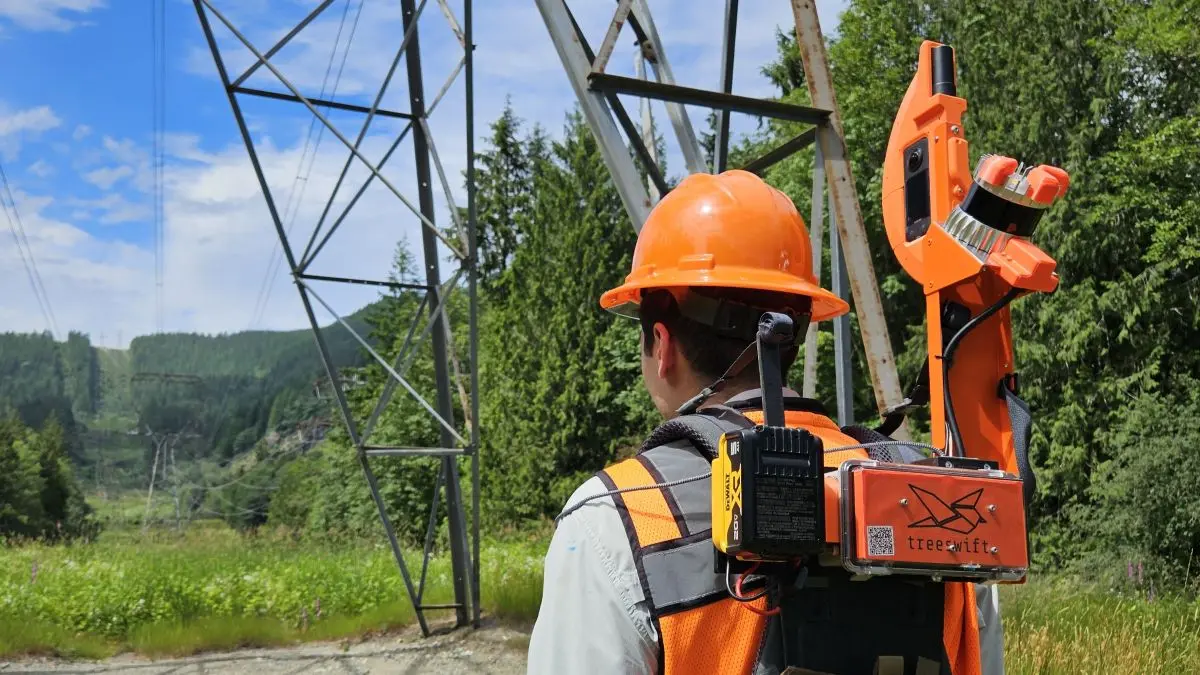
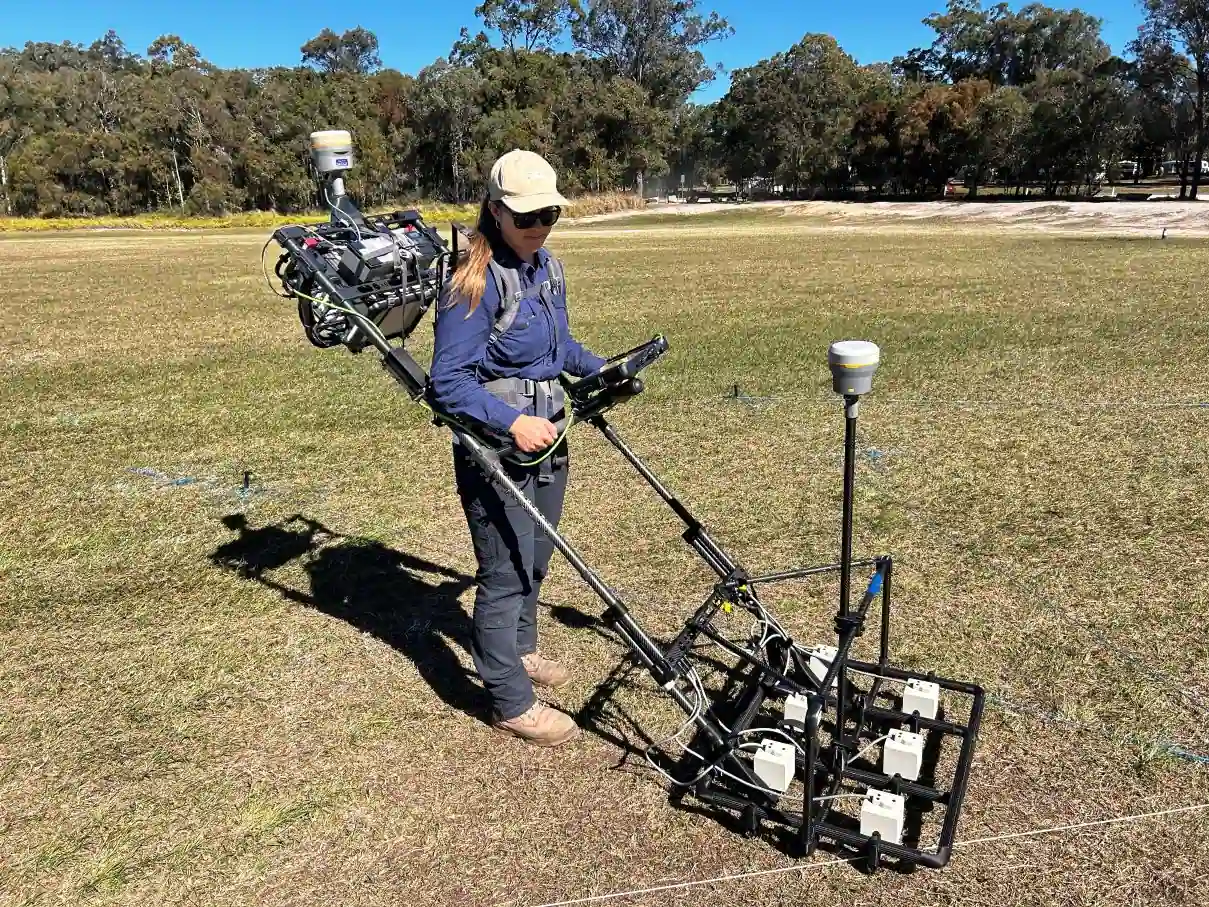
Discover the unique benefits of our products. They are high-performance, precise and small. This makes them a great choice for helping you find your way.


Our production process
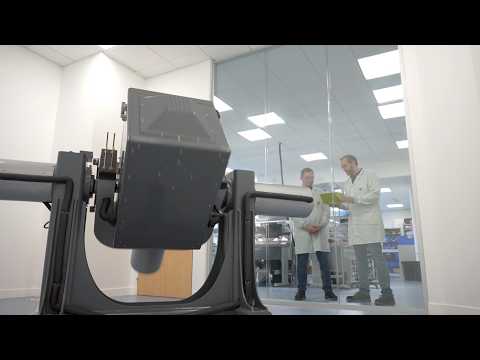
Discover the precision and expertise behind every SBG Systems products. This following video offers an inside look at how we meticulously design, manufacture, and test our high-performance inertial systems.
From advanced engineering to rigorous quality control, our production process ensures that each product meets the highest standards of reliability and accuracy.
Watch now to learn more!
Ask for a quotation
They talk about us
We showcase the experiences and testimonials from industry professionals and clients who have leveraged our products in their projects.
Discover how our innovative technology has transformed their operations, enhanced productivity, and delivered reliable results across various applications.



FAQ section
Welcome to our FAQ section, where we address your most pressing questions about our cutting-edge technology and its applications. Here, you’ll find comprehensive answers regarding product features, installation processes, troubleshooting tips, and best practices to maximize your experience.
Find your answers here!
What is the difference between IMU and INS?
The difference between an Inertial Measurement Unit (IMU) and an Inertial Navigation System (INS) lies in their functionality and complexity.
An IMU (inertial measuring unit) provides raw data on the vehicle’s linear acceleration and angular velocity, measured by accelerometers and gyroscopes. It supplies information on roll, pitch, yaw, and motion, but does not compute position or navigation data. The IMU is specifically designed to relay essential data about movement and orientation for external processing to determine position or velocity.
On the other hand, an INS (inertial navigation system) combines IMU data with advanced algorithms to calculate a vehicle’s position, velocity, and orientation over time. It incorporates navigation algorithms like Kalman filtering for sensor fusion and integration. An INS supplies real-time navigation data, including position, velocity, and orientation, without relying on external positioning systems like GNSS.
This navigation system is typically utilized in applications that require comprehensive navigation solutions, particularly in GNSS-denied environments, such as military UAVs, ships, and submarines.
What is an Inertial Measurement Unit?
Inertial Measurement Units (IMUs) are sophisticated devices that measure and report a body’s specific force, angular velocity, and sometimes magnetic field orientation. IMUs are crucial components in various applications, including navigation, robotics, and motion tracking. Here’s a closer look at their key features and functions:
- Accelerometers: Measure linear acceleration along one or more axes. They provide data about how quickly an object is speeding up or slowing down and can detect changes in motion or position.
- Gyroscopes: Measure angular velocity, or the rate of rotation around a specific axis. Gyroscopes help determine orientation changes, enabling devices to maintain their position relative to a reference frame.
- Magnetometers (optional): Some IMUs include magnetometers, which measure the strength and direction of magnetic fields. This data can help determine the device’s orientation relative to the Earth’s magnetic field, enhancing navigational accuracy.
IMUs provide continuous data on an object’s motion, allowing for real-time tracking of its position and orientation. This information is critical for applications like drones, vehicles, and robotics.
In applications such as camera gimbals or UAVs, IMUs help stabilize movements by compensating for unwanted motions or vibrations, resulting in smoother operations.