Autonomous ferry research in real-world urban waterways
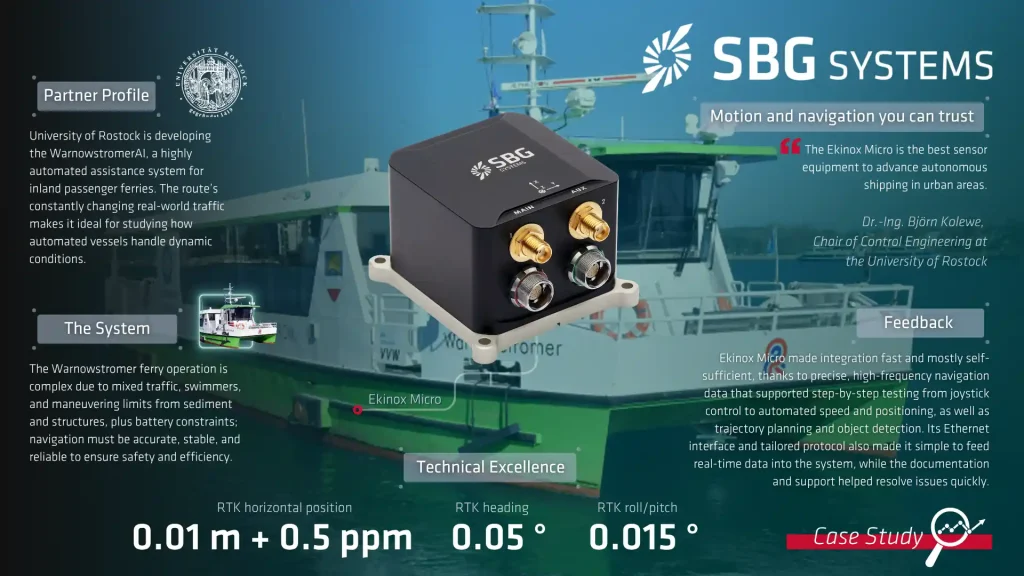
WarnowstromerAI (a research project by University of Rostock) is developing Autonomous ferry technologies for safe and efficient navigation in busy urban waterways. Using our Ekinox Micro GNSS/INS, the team achieved precise positioning and reliable motion data for automated vessel operations. Together, the project shows how advanced navigation technology is quietly shaping the future of inland shipping. It points toward smarter and safer waterways where autonomous vessels can navigate complex urban waters with confidence.
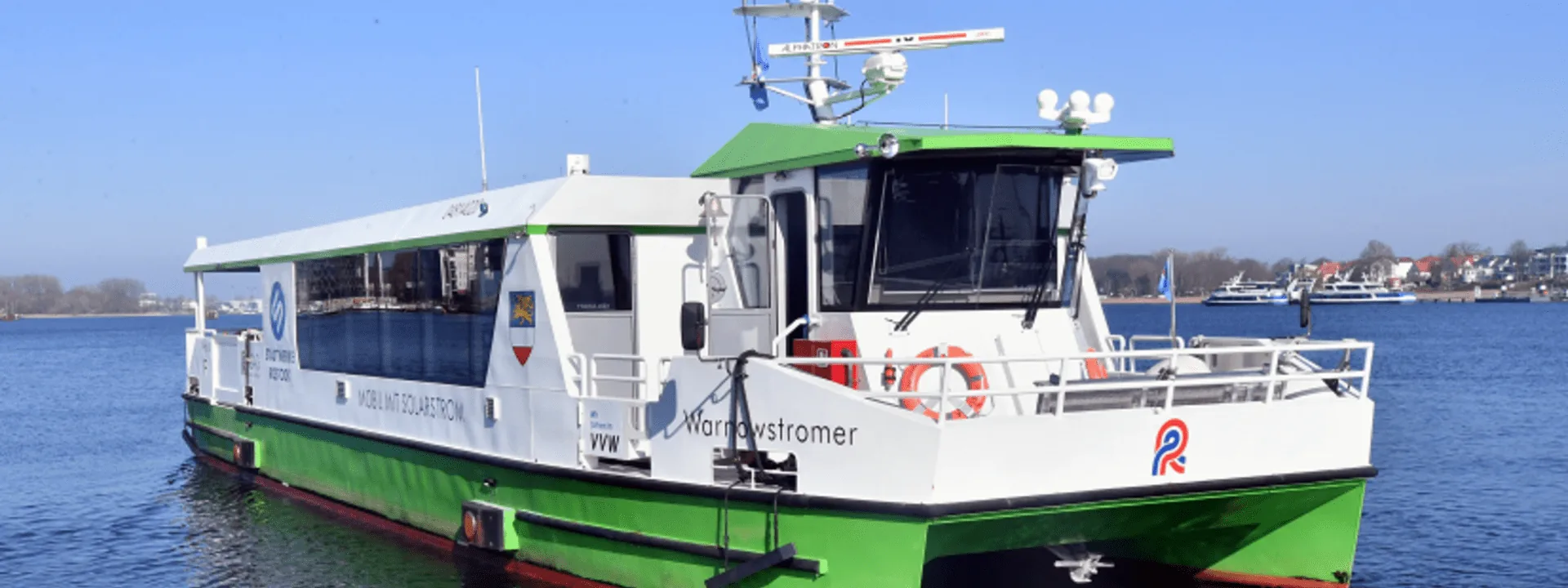
WarnowstromerAI is a research project led by the University of Rostock, focused on developing highly automated assistance systems for inland passenger Autonomous ferry. The project uses Warnowstromer, a ferry, which crosses the River Warnow along a 500-meter route in a busy urban area.
This route is frequented by tourists, commercial vessels, and recreational watercraft, making it an ideal setting to test autonomous ferry navigation, energy-efficient operations, and advanced environmental recognition. Because of this constant activity, the ferry operates in a dynamic environment where traffic conditions can change quickly. This route is particularly valuable for researchers. They can study how automated vessels react to real-world situations instead of controlled test environments.
Customer objectives: Enabling reliable autonomous navigation
The project started with a clear mission: to develop a control and feedback system that can support automated assistance functions on inland ferries. The team wanted to create a solution that could be applied beyond a single vessel. To make this possible, they considered not only technical performance, but also economic and regulatory aspects. The aim is to build a system that can operate safely and efficiently, even in complex and constantly changing environments.
From the start, the development team realized that accurate and reliable positioning data would be key to making automation work. In a busy river crossing with many vessels, changing winds, and shifting currents, precise navigation data is absolutely essential.
Technical challenges
Operating the ferry autonomously is far from simple. The Warnowstromer moves among commercial shipping, sport boats, leisure electric vessels, and even swimmers. Sediment, vegetation, and nearby structures can limit where the ferry can maneuver. At the same time, the ferry runs on a limited battery, so it needs to operate in an energy-efficient way.
These operational constraints mean that navigation and control systems must not only be accurate, but also reliable over long periods of operation. Any instability or loss of positioning information could affect both safety and efficiency.
To meet these challenges, the team required:
- Dead reckoning for up to 5 minutes, allowing navigation under bridges and in GNSS-denied areas. Tactical-grade IMU performance at a minimum of 100 Hz.
- GPS compass using flexible dual antennas integrated with the IMU.
- Gyroscope specifications of: 0.1°/√h, 2°/h bias stability, 60 µg/√Hz, and 20 µg acceleration noise.
These requirements meant the team needed a navigation system that provides precise, real-time data and can work reliably in changing environmental conditions.
Integrating our navigation solution into the autonomous ferry
The team discovered us through an online search and quickly recognized that our inertial navigation solutions could meet their needs. Engagement began with a quotation request, and we worked closely with them to ensure seamless integration. We provided the team with Ekinox Micro, our tactical-grade INS/GNSS system, to meet their demanding requirements.
Using Ekinox Micro, the team could move from initial tests to fully automated functions in a structured, step-by-step approach.
They first verified basic operations using joystick control while our system delivered precise position and orientation data. This initial phase allowed the team to validate the quality of the navigation data and confirm that it could support more advanced automation functions later in the project.
Next, they added speed and position control using the high-frequency data from the dual-antenna GNSS provided by Ekinox Micro. This helped them adjust the ferry’s track and automatic positioning more accurately using real-world measurements.
Integration and testing
Throughout integration and testing, our system’s fast Ethernet interface and customized protocol made it easy to feed real-time navigation data into their control algorithms. Ekinox Micro enabled precise maneuvering even under changing environmental conditions, allowing the team to focus on autonomous functions without needing workarounds.
Operators could supervise the autonomous ferry confidently, with accurate, high-resolution navigation information at all times. Continuous data availability allowed the team to evaluate and improve autonomous functions like trajectory planning and object detection step by step.
The team required very little support during integration. They were able to install and configure the system largely on their own using our documentation resources. Reflecting on this smooth experience, they shared: “Your online documentation and support portal helped the team integrate your solution quickly. Whenever we identified a bug, the Support team provided updates promptly to keep the implementation running smoothly.”
Results and next steps
With the navigation system integrated, the team now has a stable and reliable source of positioning and orientation data for their tests. This has helped them evaluate automated functions more clearly and adjust their control algorithms using real navigation data during their ferry trials. It also provides a consistent reference for comparing different test scenarios and improving system behavior over time.
Looking ahead, the project will continue to evolve. The team plans to combine the navigation system with optical sensors to improve how the autonomous ferry detects and understands its surroundings. This will support more advanced autonomous functions and help the researchers study how automated ferries or vessels can operate safely in busy urban waterways.
Reflecting on the work so far, the team summarized their experience simply: “The Ekinox Micro is the best sensor equipment to advance autonomous shipping in urban areas.”
The project is still ongoing, but the results so far show how reliable navigation data can support the development of automated ferry operations in real-world conditions.
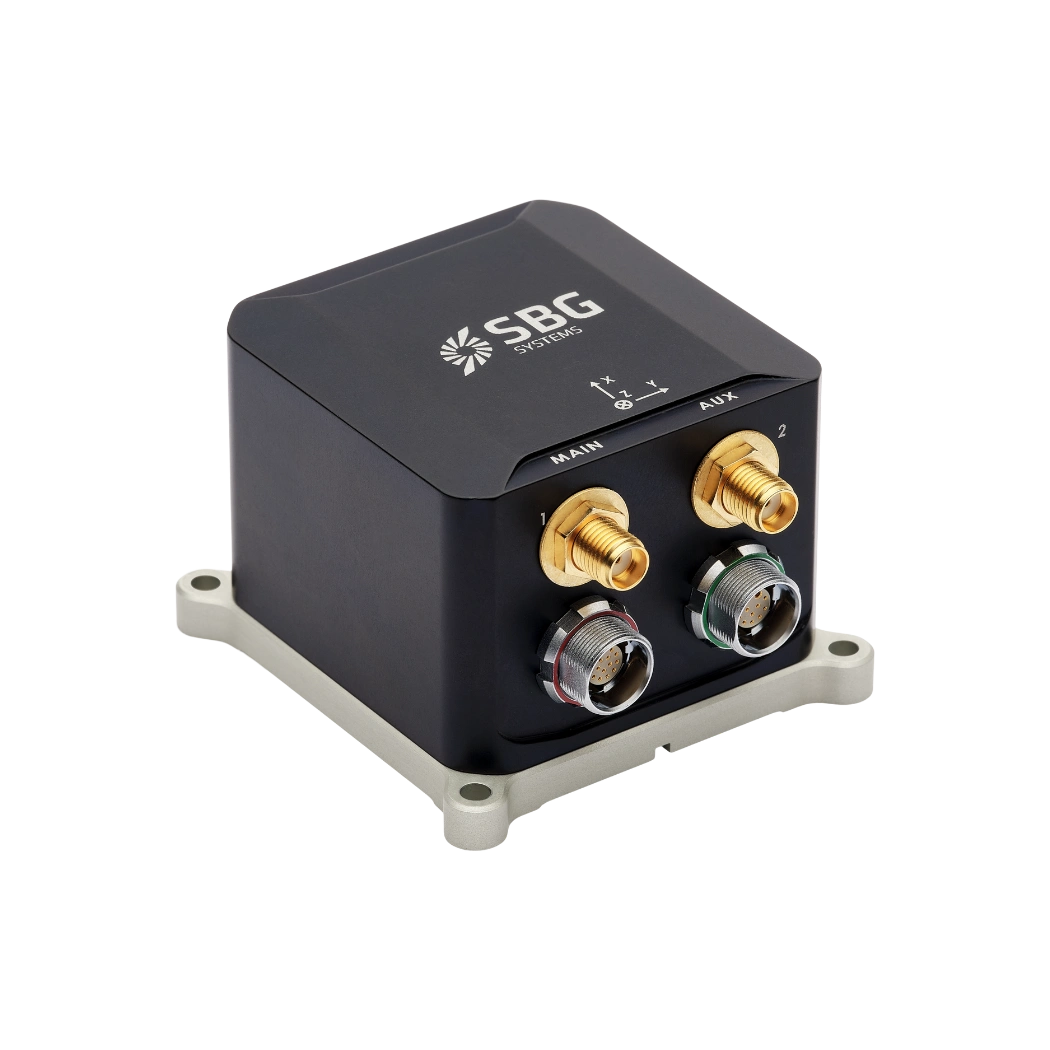
Ekinox Micro
Ekinox Micro delivers high-performance GNSS-aided inertial navigation for land, marine, and airborne applications. This miniature sensor integrates a GNSS receiver with tactical MEMS inertial sensors to provide superior accuracy in challenging conditions.
Ekinox Micro is small and lightweight, yet rugged enough to withstand harsh environments.