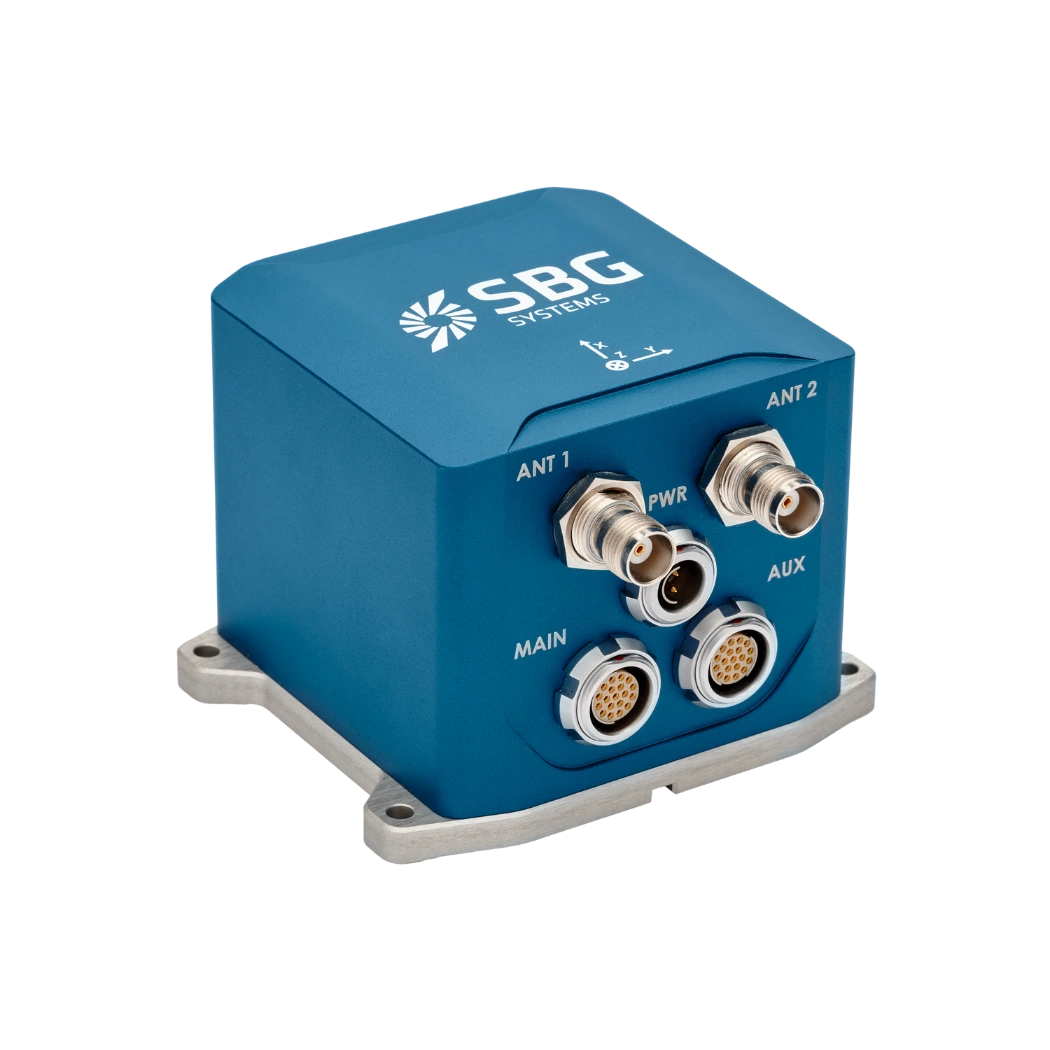

Sensor fusion

Sensor fusion is the process of combining measurements from multiple heterogeneous sensors to estimate a system’s state with greater accuracy, reliability and robustness than any individual sensor can provide. In inertial navigation, sensor fusion integrates data from IMUs, GNSS receivers, magnetometers, odometers, DVLs, cameras, LiDAR and other aiding sensors to continuously estimate position, velocity and attitude.
Each sensor exhibits distinct strengths and limitations. MEMS gyroscopes and accelerometers provide high-rate motion measurements with excellent short-term stability but accumulate bias and drift over time through dead reckoning. Conversely, GNSS delivers absolute position and velocity without long-term drift but suffers from signal blockage, multipath, interference and limited update rates. Sensor fusion exploits these complementary characteristics to produce a solution that remains accurate under dynamic and harsh conditions.
Modern sensor fusion algorithms primarily rely on Bayesian estimation techniques. The Extended Kalman Filter (EKF) is the industry standard for nonlinear navigation systems. The EKF propagates the inertial solution using high-rate IMU measurements. It continuously corrects accumulated errors using external observations. This approach maintains accurate and stable navigation over time. Others implement factor graph optimization, particle filters, or smoothing algorithms. The algorithm choice depends on application requirements, computational resources, and system complexity.
High-performance GNSS/INS tightly integrate inertial data with external sensor measurements. They transition seamlessly between GNSS availability and GNSS-denied operation. The navigation filter estimates the platform state in real time. It also estimates sensor biases, scale factors, and other stochastic error sources. These corrections significantly improve long-term accuracy, stability and system integrity.
Sensor fusion supports defense, marine, surveying, robotics, and automotive applications. By combining complementary sensor measurements, it improves accuracy and robustness. It also enhances situational awareness in challenging environments. As a result, systems maintain reliable positioning when individual sensors cannot meet performance requirements alone.