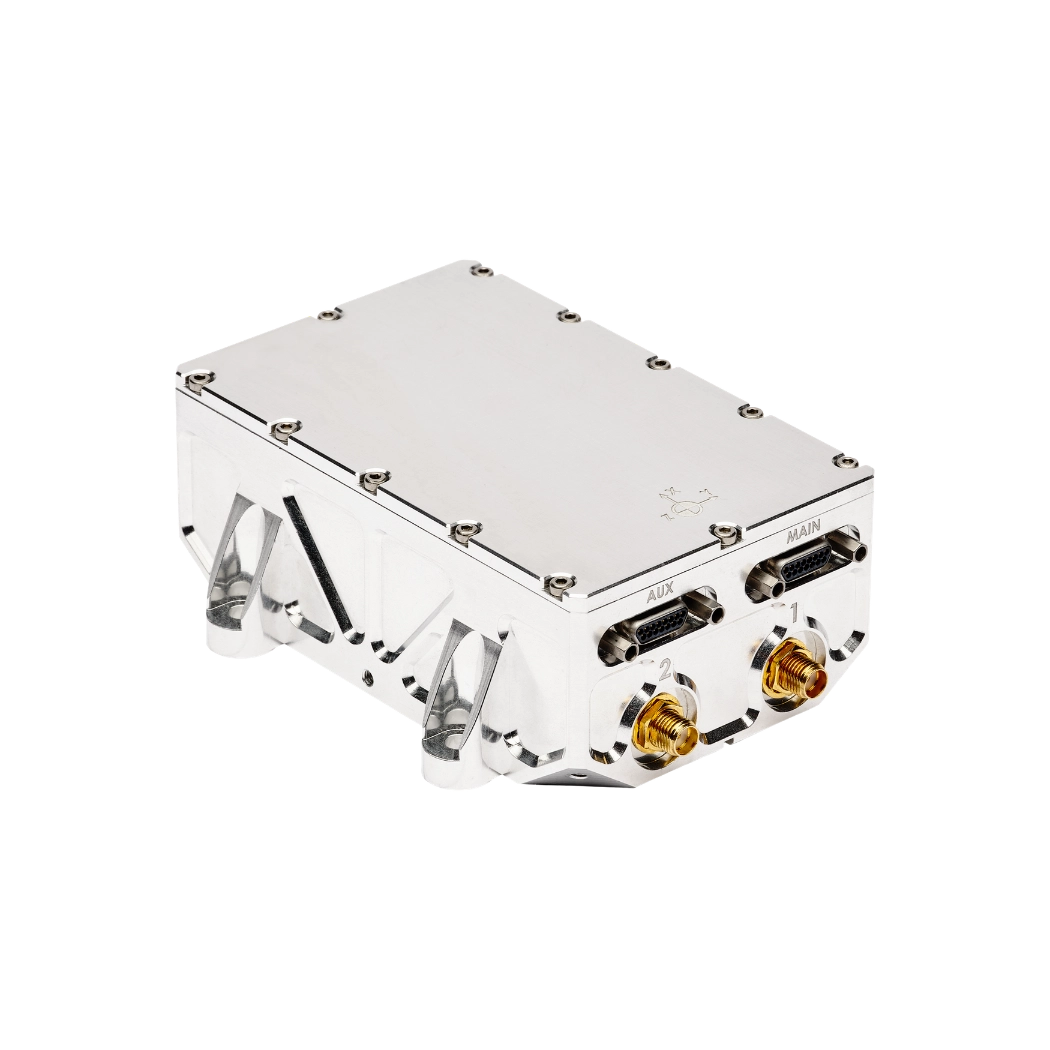

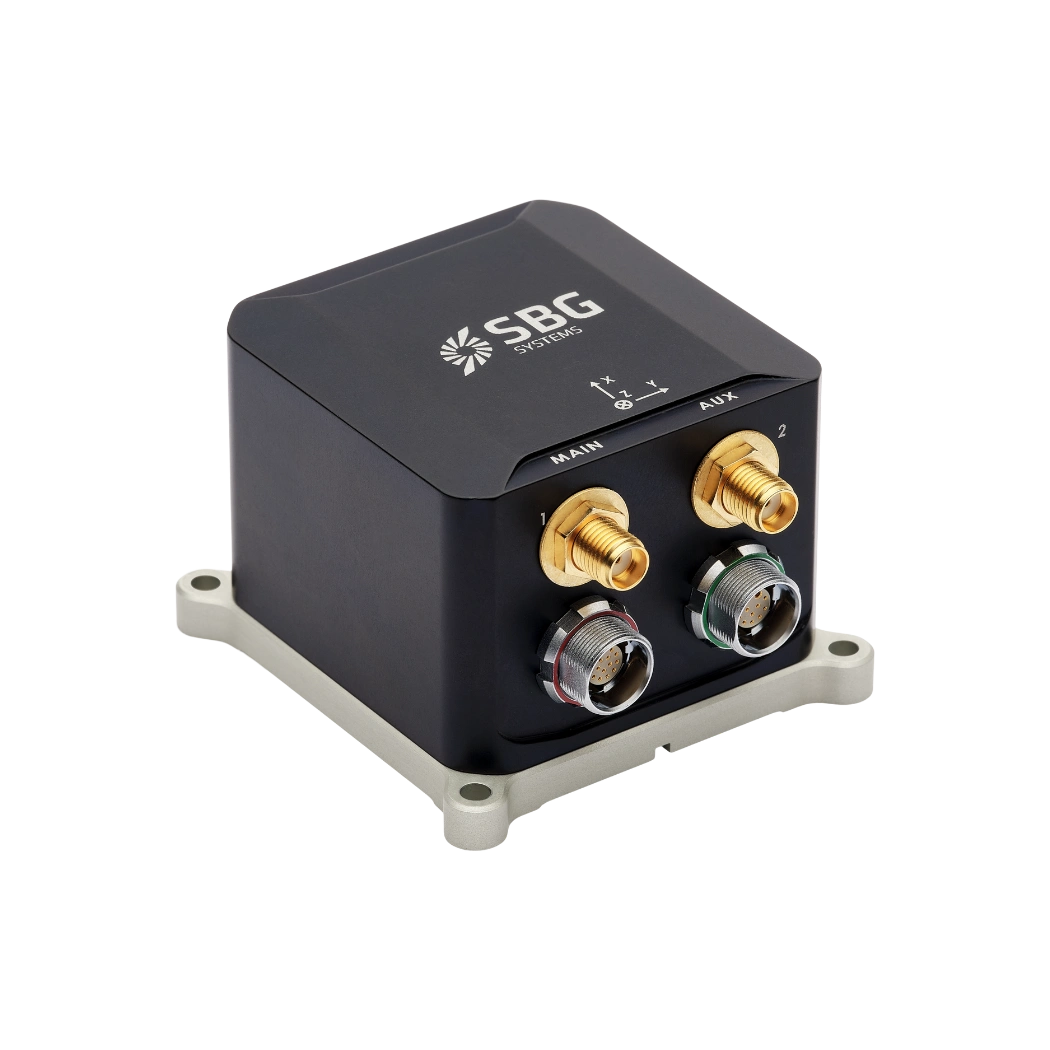
Accelerometer range

Accelerometer range defines the maximum measurable acceleration that a sensor can accurately capture without saturating. Manufacturers specify this parameter as a symmetrical full-scale value, such as ±2 g, ±8 g, ±16 g, ±50 g, or ±100 g, where 1 g = 9.80665 m/s². The selected range determines the maximum input acceleration while directly influencing measurement resolution, quantization, and noise performance.
An accelerometer converts the proof mass displacement into a digital output using an analog-to-digital converter (ADC). For an N-bit ADC, the theoretical quantization step is
where is the positive full-scale range. Increasing the measurement range enlarges the least significant bit (LSB), reducing the sensor’s theoretical resolution. Although modern inertial sensors typically maintain constant digital resolution by adapting internal gain, the effective noise density generally increases with larger measurement ranges.
Selecting an insufficient range causes output saturation whenever
preventing the sensor from representing the true acceleration. Saturation introduces clipping and corrupts inertial integration. This rapidly degrades velocity and position estimation in an INS. Conversely, selecting an excessively large range reduces sensitivity to low-level accelerations. This decreases the signal-to-noise ratio (SNR), especially during quasi-static measurements.
Dynamics in real applications
The optimal accelerometer range depends on the application’s expected dynamics. Precision surveying, mobile mapping, and stabilized marine platforms generally prioritize low noise. These systems operate with moderate ranges, typically ±2 g to ±8 g. High-dynamic platforms require wider ranges to prevent saturation during aggressive maneuvers. Examples include missiles, loitering munitions, racing UAVs, launch vehicles, and impact monitoring systems.
In inertial navigation, accelerometer range should never be considered independently. It must be evaluated alongside bias instability, scale factor accuracy, and bandwidth. Other critical parameters include vibration rectification error (VRE), sampling frequency, and noise density. A properly selected range ensures the sensor remains within its linear operating region. This maximizes measurement fidelity and improves attitude estimation. Ultimately, it enhances dead reckoning accuracy and overall INS robustness in demanding operational environments.