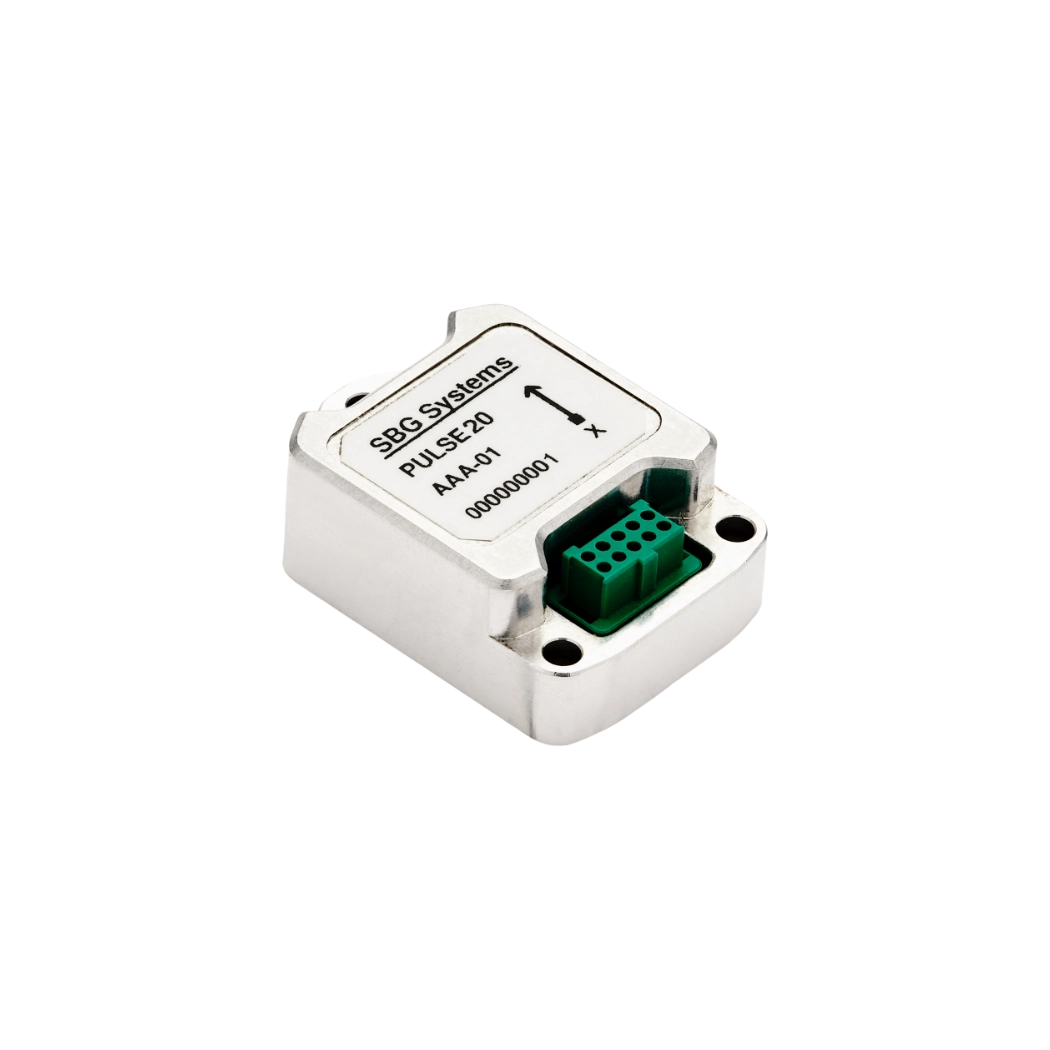
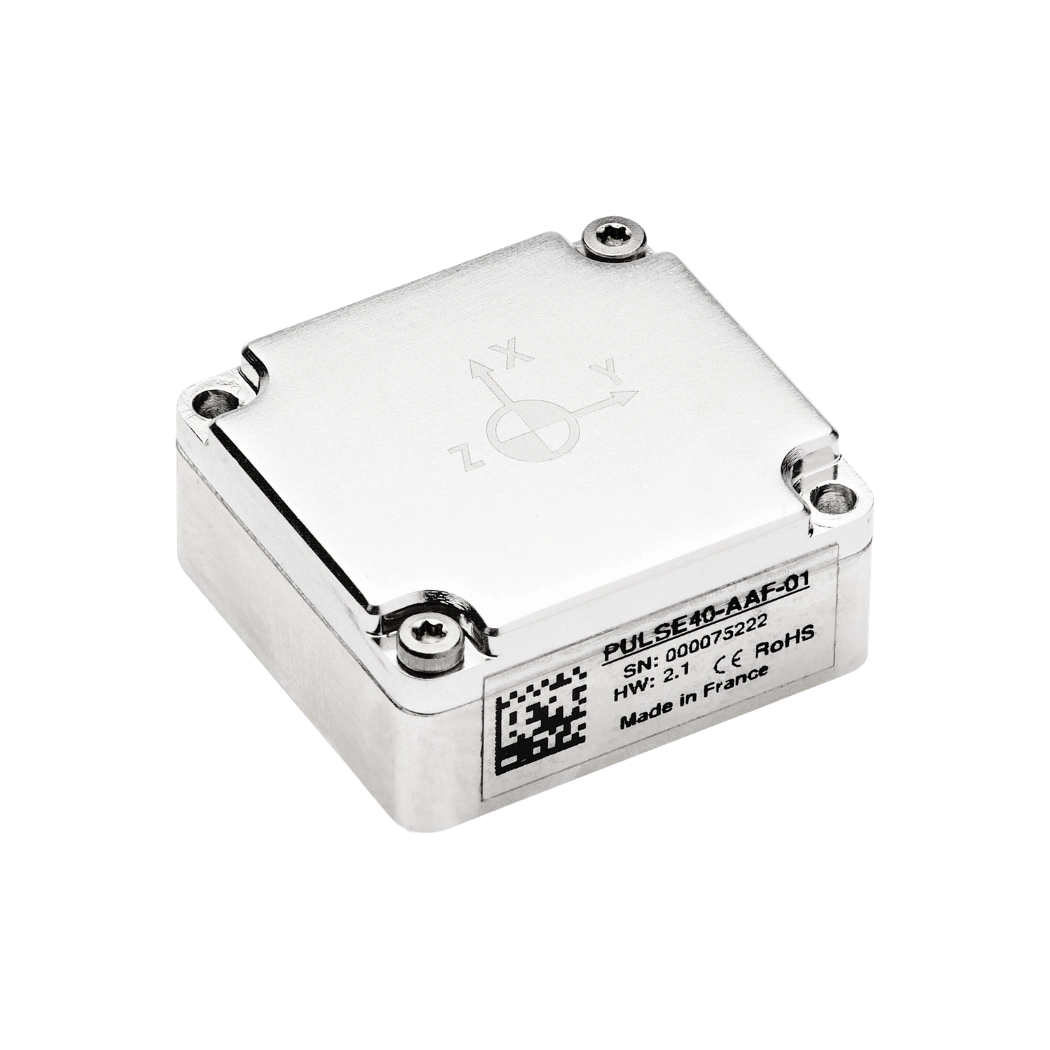
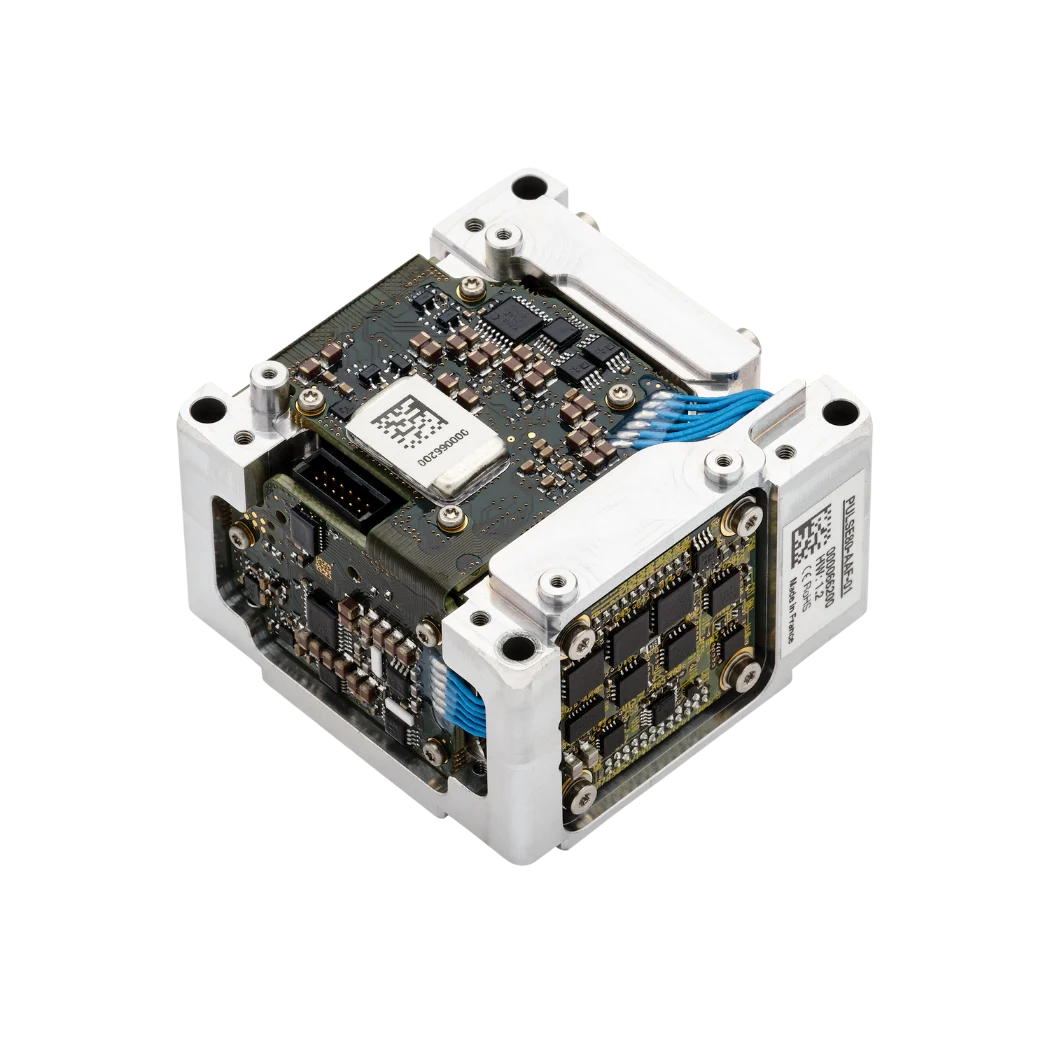
Tactical-grade IMU
A tactical-grade IMU (Inertial Measurement Unit) is a high-performance inertial sensor that measures three-axis angular rate and linear acceleration with sufficient precision for navigation, guidance, and stabilization applications requiring sustained accuracy during GNSS degradation or outages. It combines three gyroscopes and three accelerometers, typically based on advanced MEMS or FOG (Fiber Optic Gyrosocope) technologies.
IMUs are classified by performance grade based on their components characteristics. Manufacturers classify tactical-grade IMUs primarily by gyroscope performance. Typical specifications include bias instability below 1°/h, Angular Random Walk (ARW) below 0.15°/√h, and excellent vibration robustness, scale factor stability, and temperature repeatability. These characteristics minimize inertial error accumulation and enable accurate dead reckoning for extended periods.
Unlike industrial-grade sensors designed for motion monitoring, tactical-grade IMUs support continuous inertial navigation when integrated into an Attitude and Heading Reference System (AHRS) or an Inertial Navigation System (INS). Their low error growth allows the navigation filter to maintain reliable attitude, velocity, and position estimates while external positioning signals remain unavailable.
Modern tactical-grade MEMS IMUs achieve this performance through precision microfabrication and redundant sensing architectures. They also incorporate advanced calibration, real-time temperature compensation, and sophisticated error models. These sensors deliver high bandwidth, low latency, and exceptional shock and vibration resistance. These characteristics make them suitable for highly dynamic operating environments.
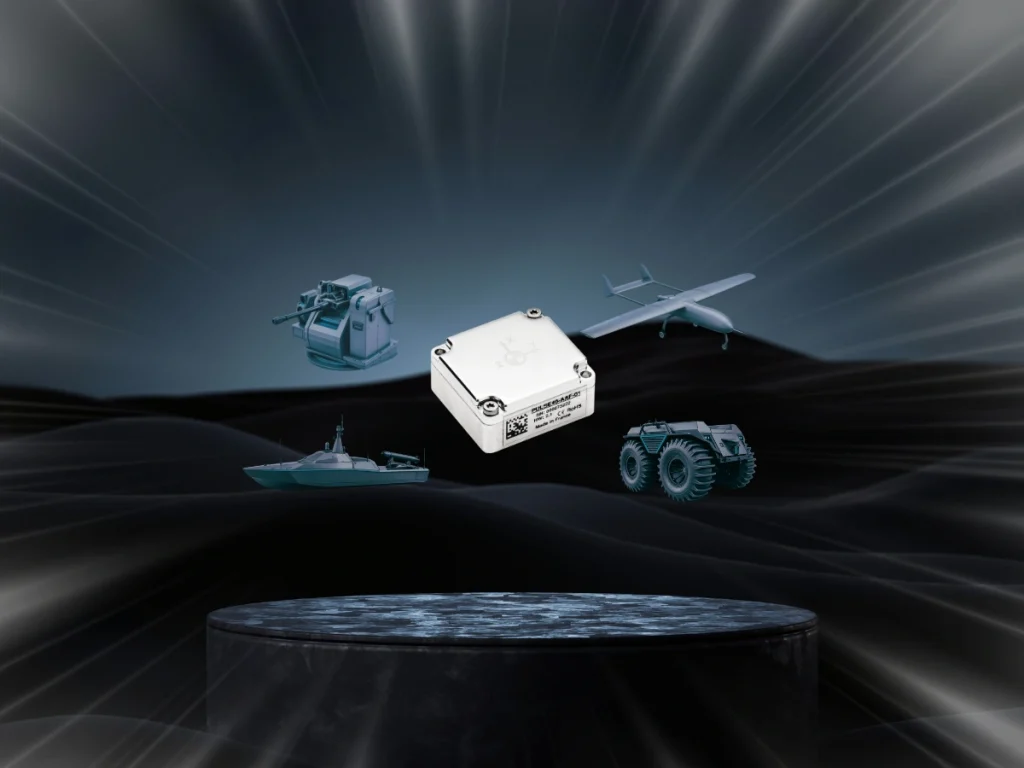
Engineers use tactical-grade IMUs in defense systems, hydrographic surveying, airborne payloads (e.g. LiDAR), and mobile mapping platforms. They also support autonomous robots, offshore equipment, rail positioning, and unmanned aircraft. These sensors bridge GNSS outages while maintaining navigation continuity. As a result, they remain fundamental components of modern positioning and navigation systems.