

UAV components
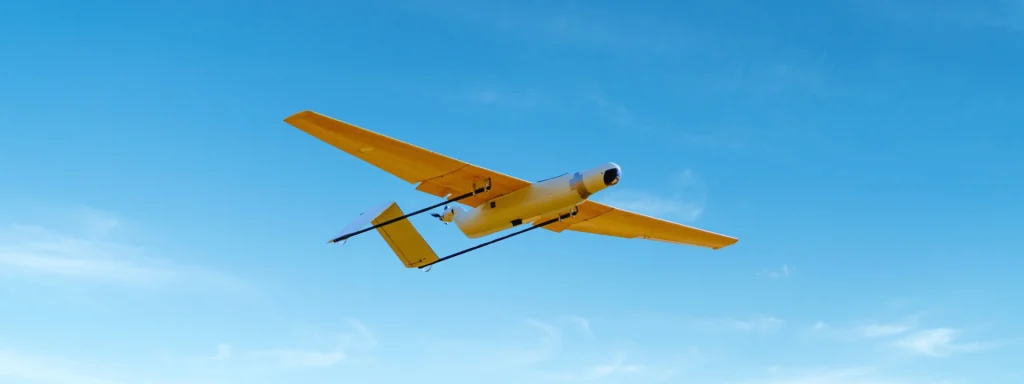
UAV components work together to provide the stability, navigation, control, and mission capabilities required for modern unmanned aerial vehicles (UAVs). A UAV combines multiple subsystems to ensure safe and efficient operation.
The airframe and propulsion system generate lift and thrust. Meanwhile, the flight controller stabilizes the aircraft and executes control commands. At the same time, navigation sensors provide accurate positioning and orientation. In parallel, communication links enable command, control, and data transmission. Finally, mission payloads perform application-specific tasks. Collectively, these interconnected components determine flight performance, reliability, and operational safety across commercial, industrial, and defense applications.
Components
- Airframe: forms the structural backbone of the UAV, providing mechanical support while minimizing weight. Materials such as carbon fiber composites and aerospace-grade aluminum are commonly used to maximize strength-to-weight ratio and improve durability.
- Propulsion system: Consists of electric motors or internal combustion engines, electronic speed controllers (ESCs), propellers, and power distribution electronics. Altogether, these components generate thrust while simultaneously optimizing energy efficiency and flight endurance.
- Flight controller: serves as the UAV’s central processing unit, continuously collecting data from onboard sensors to stabilize the aircraft and execute control algorithms. Modern controllers integrate inertial measurement units (IMUs), barometers, magnetometers, and GNSS receivers to estimate position, velocity, and attitude.
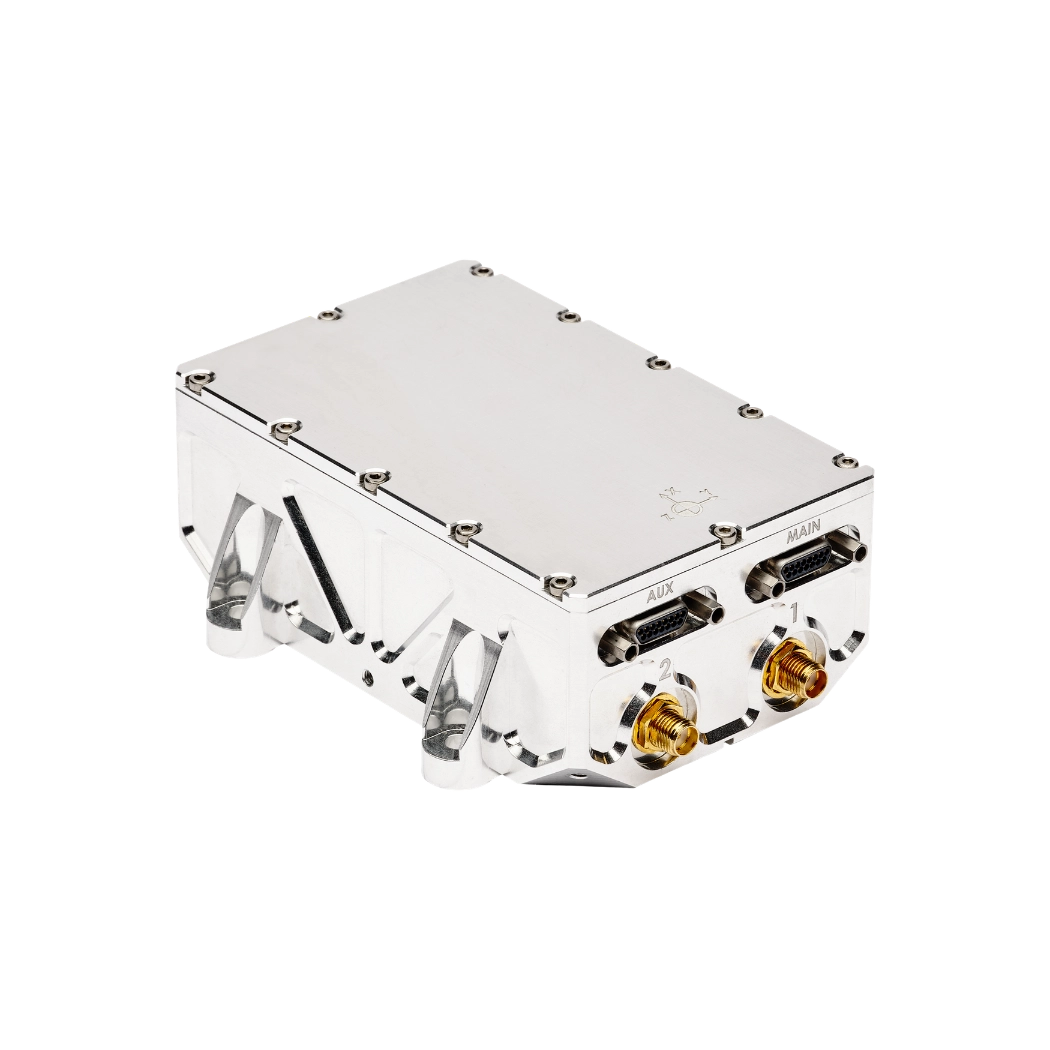
- Inertial Navigation System (INS): For applications requiring high accuracy, UAVs often incorporate an Inertial Navigation System (INS) that tightly couples GNSS measurements with tactical-grade inertial sensors. Generally, this sensor fusion provides precise navigation even during temporary GNSS outages, signal degradation, or electronic interference, making it essential for autonomous and beyond-visual-line-of-sight (BVLOS) operations.
- Communication system: enables telemetry, command and control, payload data transmission, and video streaming through RF links, LTE/5G, or satellite communications. Redundant communication channels enhance operational resilience in challenging environments.
- Payloads: Mission-specific payloads include electro-optical cameras, LiDAR scanners, hyperspectral sensors, thermal imagers, radar, or mapping equipment. Their effectiveness depends on accurate stabilization provided by gimbals and precise position and orientation data supplied by the navigation system.
Together, these integrated components determine a UAV’s flight performance, navigation accuracy, payload capability, and mission reliability. Selecting high-performance sensors and robust navigation technologies is fundamental to achieving safe, autonomous, and precise operations in increasingly demanding environments.
Explore our inertial solutions for UAVs