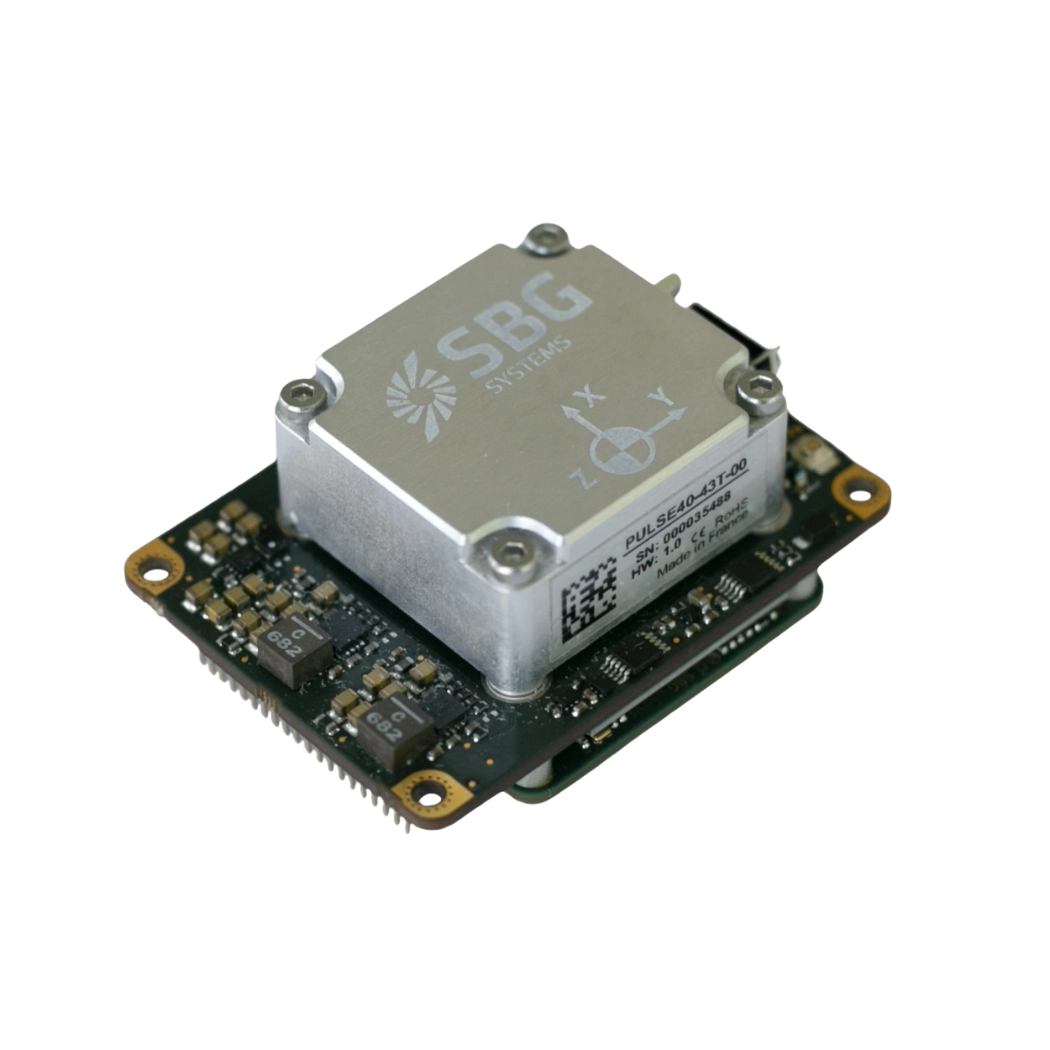
X-axis

The x-axis is one of the three orthogonal axes used to define the sensor’s orientation and measure motion. It typically represents the forward or longitudinal direction of the device, depending on how the sensor is mounted. Together with the y-axis (side-to-side) and z-axis (up-and-down), the x-axis forms a 3D reference frame that allows the sensor to capture full spatial movement.
The x-axis in a gyroscope measures angular velocity and detects rotation in degrees per second or radians per second. When the device tilts or rotates along the x-axis, the gyroscope outputs a signal proportional to the rotation rate. This data helps inertial navigation systems track orientation changes accurately in real time. Additionaly, the x-axis in an accelerometer measures linear acceleration and detects motion in meters per second squared and records the sensor’s forward or backward movement. By capturing acceleration, the accelerometer estimates velocity and displacement over time.
Together, the gyroscope and accelerometer axis provide complementary information for motion tracking. The gyroscope measures rotational motion while the accelerometer measures translational motion.
Impact in navigation systems
In navigation systems, raw gyroscope and accelerometers are processed through a filter, such as a Kalman filter, to compute precise orientation and position. In robotics, drones, and vehicles, the x-axis enables stable motion control and maneuvering. They detect tilts, vibrations, and sudden impacts along the x-axis, improving system responsiveness. Sensor calibration ensures the gyroscope outputs zero when stationary and the accelerometer correctly senses gravity.
The x-axis is essential for determining pitch, forward motion, and tilt in navigation, robotics, drones, vehicles, and other dynamic systems. Its precise alignment and calibration are critical because any misalignment can lead to errors in orientation and position estimates.
High-performance inertial sensors minimize noise and drift on the x-axis to maintain precise measurements over extended periods. Manufacturers optimize gyroscopes and accelerometers axis for sensitivity, stability, and low power consumption. Their performance directly affects navigation reliability, especially in GNSS-denied or dynamic environments.